You are getting plenty done. The important work is still moving too slowly.
A full week can hide an execution problem. Find out where your plans are losing contact with the work you actually do.
You begin with priorities. Then the week fills itself: client work, meetings, admin, staff questions, family demands, inbox, and the small fires that are hard to ignore.
By Friday, you may have worked hard and solved a great deal. The question is whether the work that mattered most received enough of you.
The Entrepreneur Execution Scorecard gives you a clear starting point.
Free • 14 questions • about 3 minutes

The plan rarely disappears all at once.
Monday can begin with two or three priorities that genuinely matter.
Then an urgent client request lands. A meeting moves. Admin expands. Someone needs an answer. A follow-up takes longer than expected.
Each change is reasonable on its own. Together, they can quietly rewrite the week.
The result is familiar: a full calendar, real effort, and one important priority carried forward again.
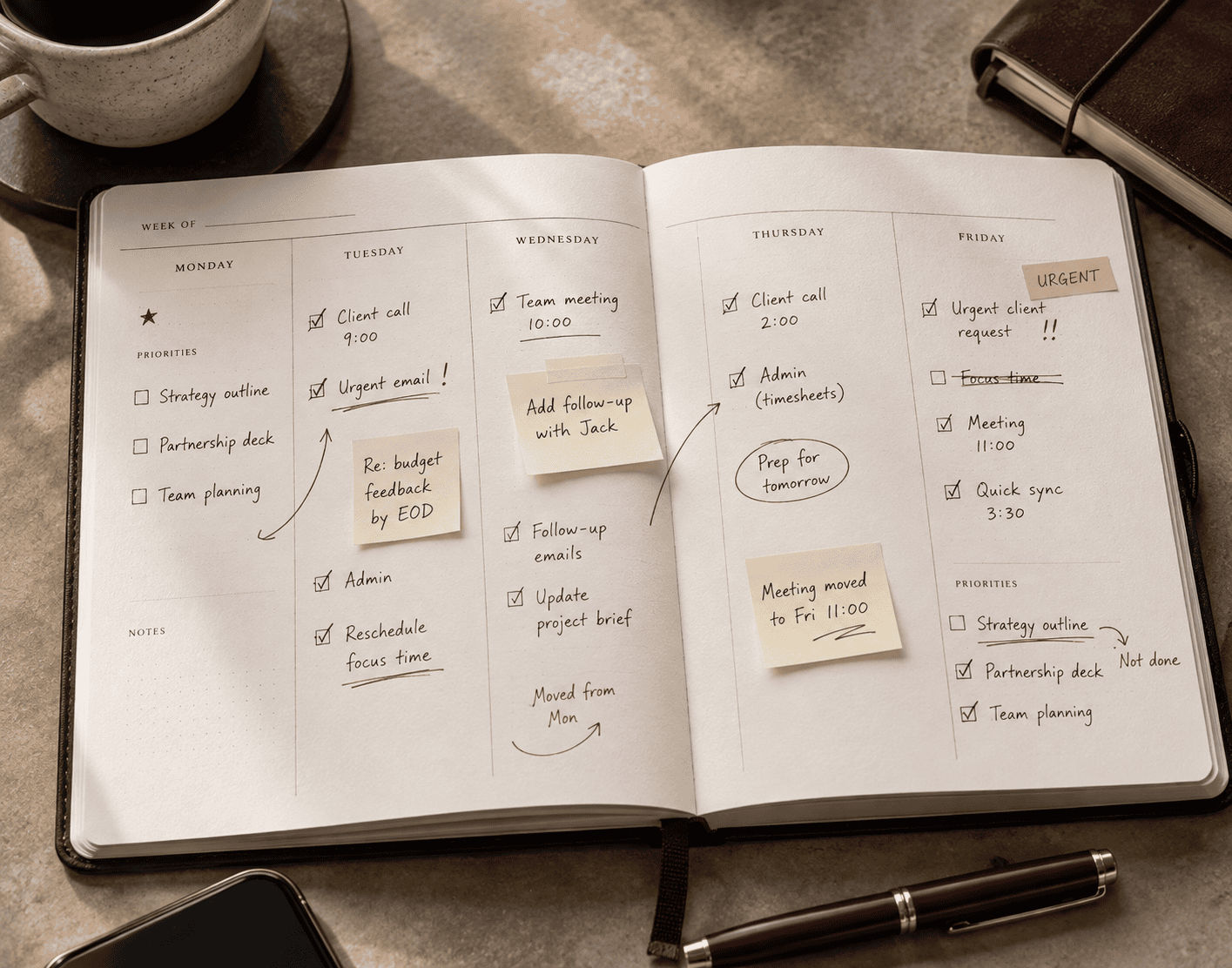
Execution weakens in ordinary ways.
The problem often looks respectable while it is happening. You are working. You are responding. You are solving things. The evidence appears in what keeps moving forward.
Carried Forward
The same meaningful priority appears on next week’s list again.
Urgency Wins
The task with the loudest deadline repeatedly displaces the work with the greatest value.
Review Slips
You make plans more often than you return to examine what actually happened.
Recommit Cycle
You periodically reset with conviction, then find yourself rebuilding the same rhythm a few weeks later.
What does your current execution pattern look like?
The Scorecard examines what happens after the plan is made: visibility, review, correction, accountability and the connection between daily action and larger aims.
Drift
Your intentions are genuine, but they are not yet held together by a dependable execution and review practice.
Busy
You are carrying a great deal, yet urgent activity can crowd out the work that should be compounding.
Rhythm
You regularly reconnect plans with reality and use what happened to correct what comes next.
Compounding
Your daily and weekly actions increasingly reinforce the larger aims you have chosen.
Your result appears immediately.
A useful review compares intention with reality.
The useful question is not whether the week felt productive.
It is whether the evidence supports the priorities you set.
What moved? What stalled? Which assumption proved wrong? What kept displacing the important work? What should change next week because of what you now know?
That kind of review turns the week into information rather than another period to leave behind.
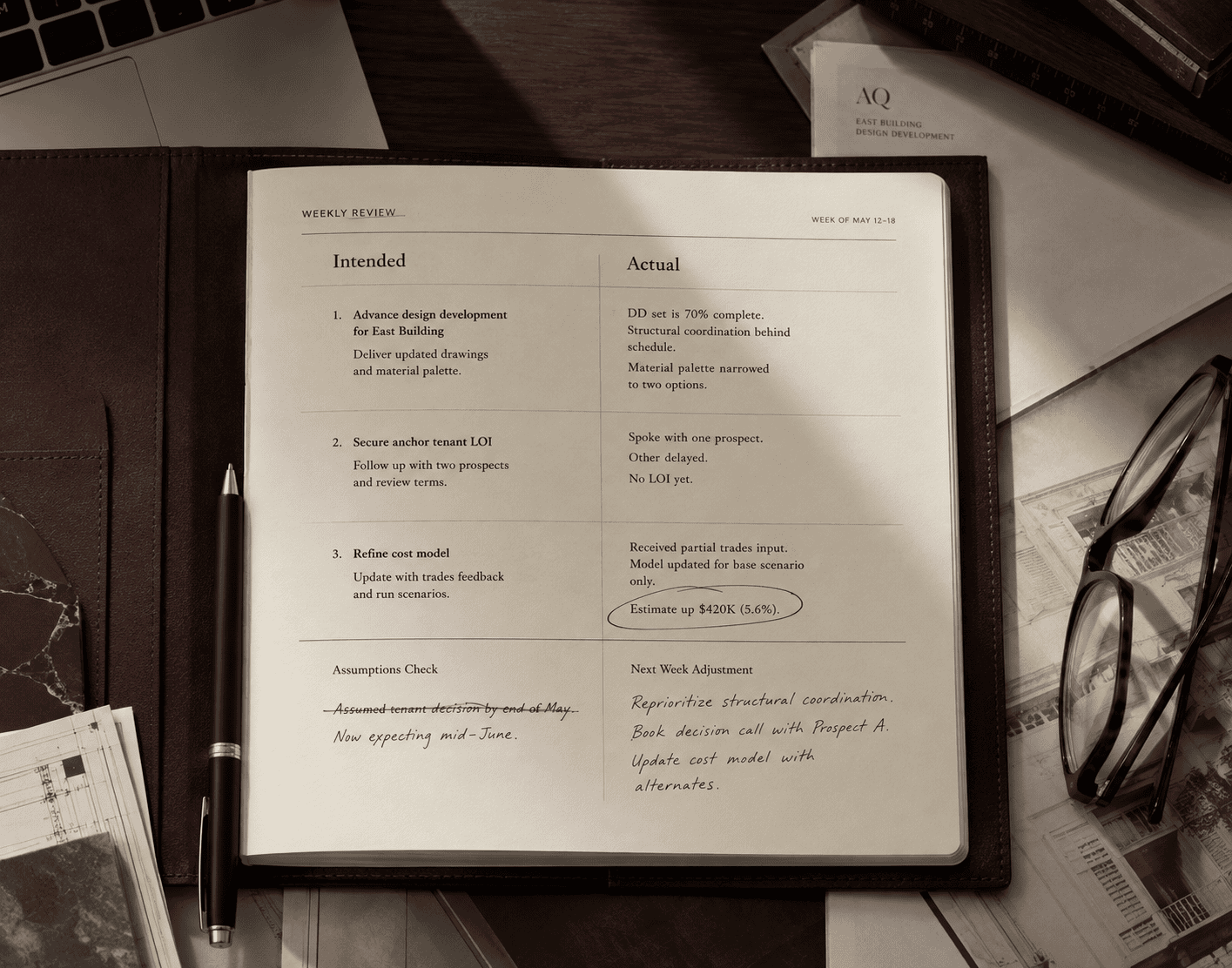
AQMeets gives the work a place to be reviewed before the pattern repeats.
The rhythm connects the day, week, month, quarter and year so that one period can inform the next.
Daily Directives
Keep today’s meaningful action visible.
Weekly Wraps
Compare the week you intended with the week you lived.
Monthly Masteries
Look far enough back to see a pattern forming.
Quarterly Quests
Restore attention to the priorities governing the season.
Annual Aims
Keep shorter periods connected with wider direction.
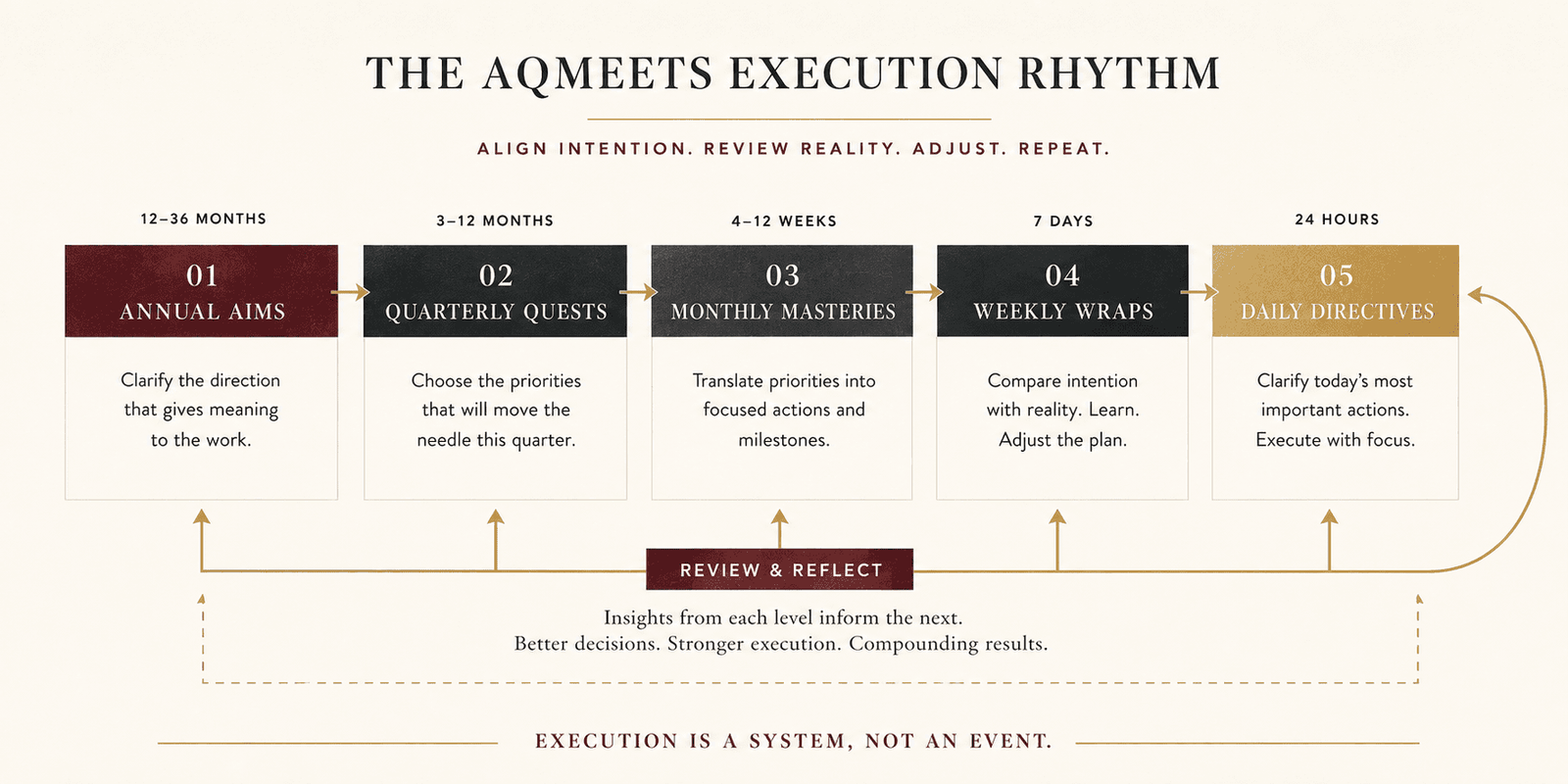
The aim is continuity: what matters remains visible long enough for action, evidence and correction to accumulate.
Free • 14 questions • about 3 minutes
AQMeets uses five movements to turn experience into correction.
Intention
What were you trying to accomplish?
Reality
What actually happened?
Analysis
What does the difference reveal?
Planning
What should change next?
Peers
Where would outside perspective strengthen the decision?
You see your Execution Zone before deciding anything else.
When you finish, you receive one of four results: Drift, Busy, Rhythm or Compounding.
The result explains the pattern suggested by your answers, where execution is most likely slipping, and which part of your working rhythm deserves attention.
If AQMeets appears relevant, you can explore it from there. There is no need to choose a membership before seeing your result.

A few practical answers.
Is this a productivity quiz?
Is the Scorecard free?
Who is it designed for?
Do I have to join AQMeets afterwards?
I already use a planner or task app. Is this different?
What is AQMeets?
See what your current way of working is producing.
Take the Entrepreneur Execution Scorecard and identify your current Execution Zone.
Free • 14 questions • about 3 minutes