You know what matters. Why does it keep moving to next week?
See where important commitments lose visibility, get crowded out, or fail to survive the week.
You decide what matters. You mean to do it.
Then the week starts. A meeting takes the hour you had set aside. An urgent request arrives. A task turns out to be less clear than it looked on Monday.
By Friday, plenty has been handled. The commitment you cared about is still sitting there.
The Execution Scorecard helps you see where follow-through is breaking after the decision has already been made.
Free • 14 questions • about 3 minutes • See your result before deciding anything else.
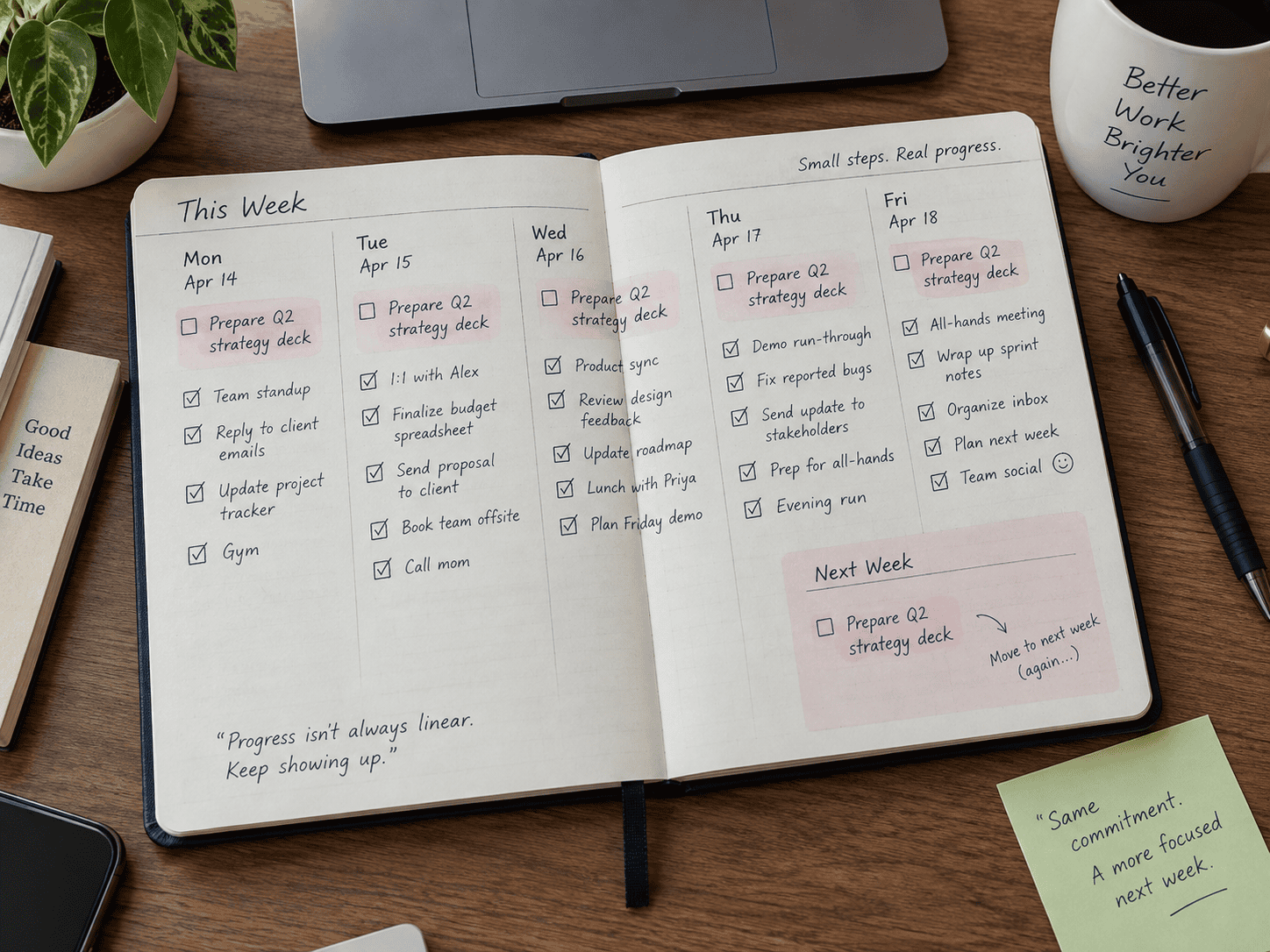
A commitment can be sincere on Monday and still be carried forward on Friday.
Usually there is no single moment when you decide to abandon the work.
Something urgent takes the first hour. A meeting expands. The next action is less obvious than expected. A new request earns attention because someone is waiting for it.
The original commitment stays on the list, but it becomes easier to renegotiate with yourself.
Friday arrives and the work is still open. You carry it forward and promise yourself that next week will be different.
One carried-forward task is ordinary. A pattern of carried-forward priorities deserves a closer look.
Follow-through depends on what happens after the intention is formed: whether the work stays visible, receives protected attention, reaches a clear next action, and gets reviewed when it slips.
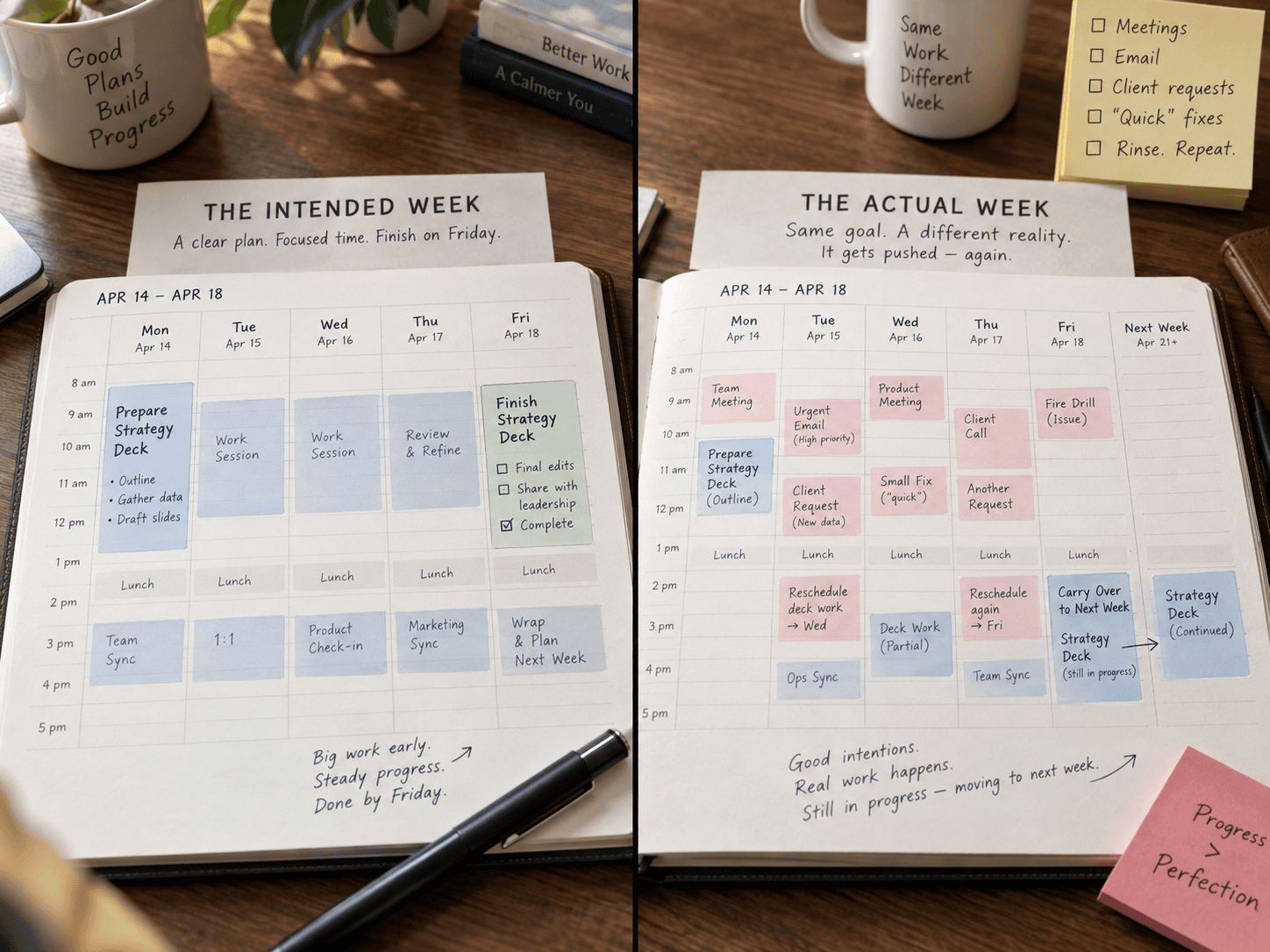
Where is your follow-through breaking?
The Scorecard looks at the period after you decide what matters. It examines whether priorities stay visible, whether important work receives enough protection, what happens when the week becomes reactive, and whether review changes the next attempt.
Drift
You have real intentions, but the week does not bring you back to them reliably enough.
Busy
You get plenty done, while urgent work repeatedly displaces the commitments you most wanted to finish.
Rhythm
You return to important commitments regularly, compare the plan with the week, and make useful corrections.
Compounding
Completion builds across weeks, so important work moves forward instead of repeatedly resetting.
Your result appears immediately.
Follow-through is decided in the days after the plan is made.
A plan made in a quiet moment meets a different environment once the week begins.
The commitment can lose its place in the calendar, become vague at the next-action level, or be displaced by work with a nearer consequence.
When that happens, inspect the week. Which commitment moved? Which one stalled? What displaced it? What needs to change before Monday?
AQMeets gives that review a regular place, so a missed commitment becomes evidence for the next plan instead of another item copied forward.
The aim is dependable completion where it matters, with enough review to learn from the weeks that go wrong.
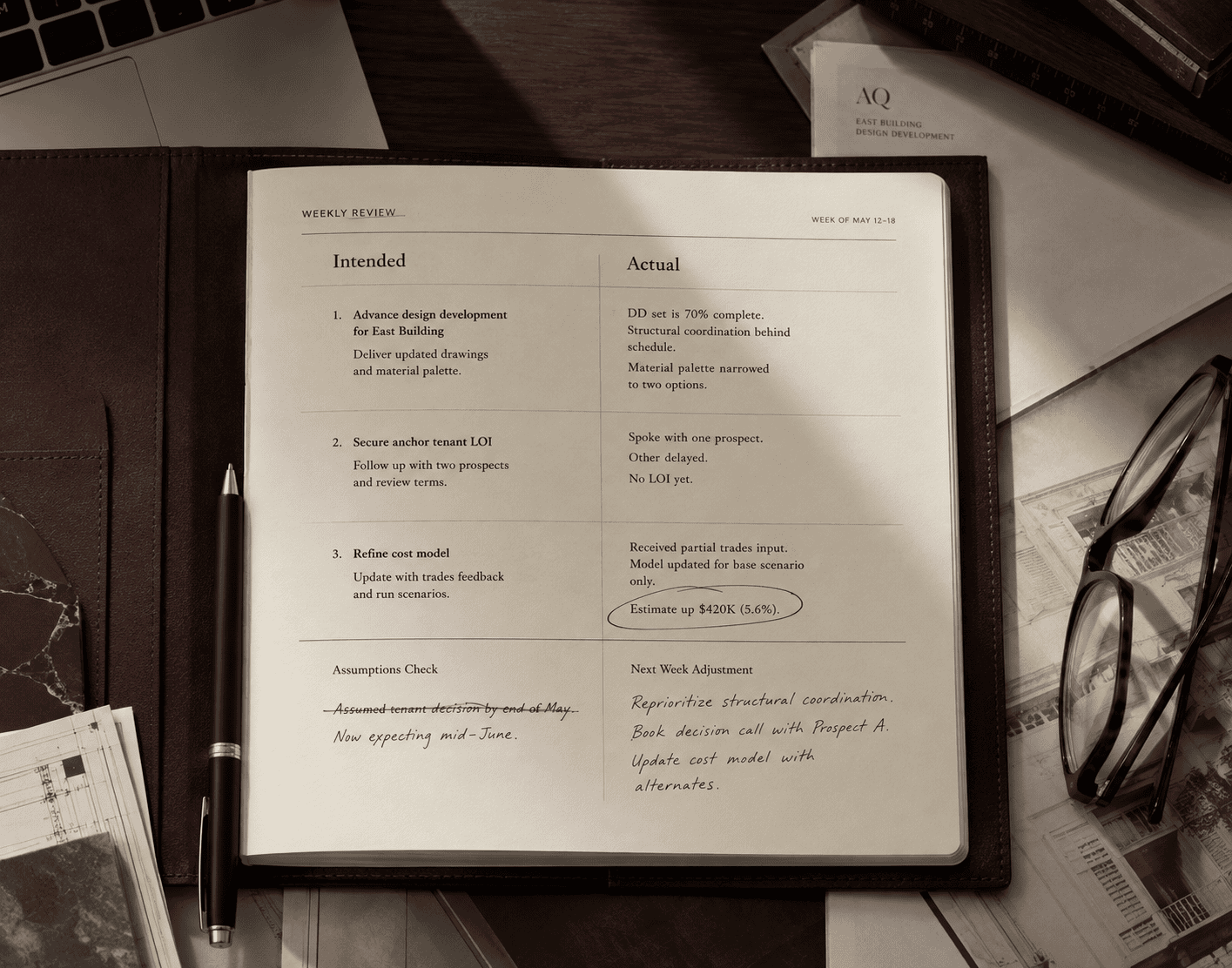
If the same important work keeps returning to next week, take three minutes to inspect the pattern.
You begin with a clear intention and a reasonable plan.
A few days later the commitment has been interrupted, postponed, or reduced to something you keep seeing without starting.
You recommit. Sometimes that works for a week. Then the same item, or the same kind of item, begins to slide again.
The Scorecard will show you whether your current working pattern looks more like Drift, Busy, Rhythm or Compounding.
Free • 14 questions • about 3 minutes
AQMeets gives important commitments a recurring place to be seen again.
The system brings you back to what you intended, what actually happened, and what should change before the next period begins.
Daily Directives
Keep the next important action in view.
Weekly Wraps
See what you followed through on and what moved again.
Monthly Masteries
Notice which kinds of commitments keep stalling.
Quarterly Quests
Check whether weekly completion is serving the larger priorities.
Annual Aims
See whether repeated weeks are adding up to the direction you chose.
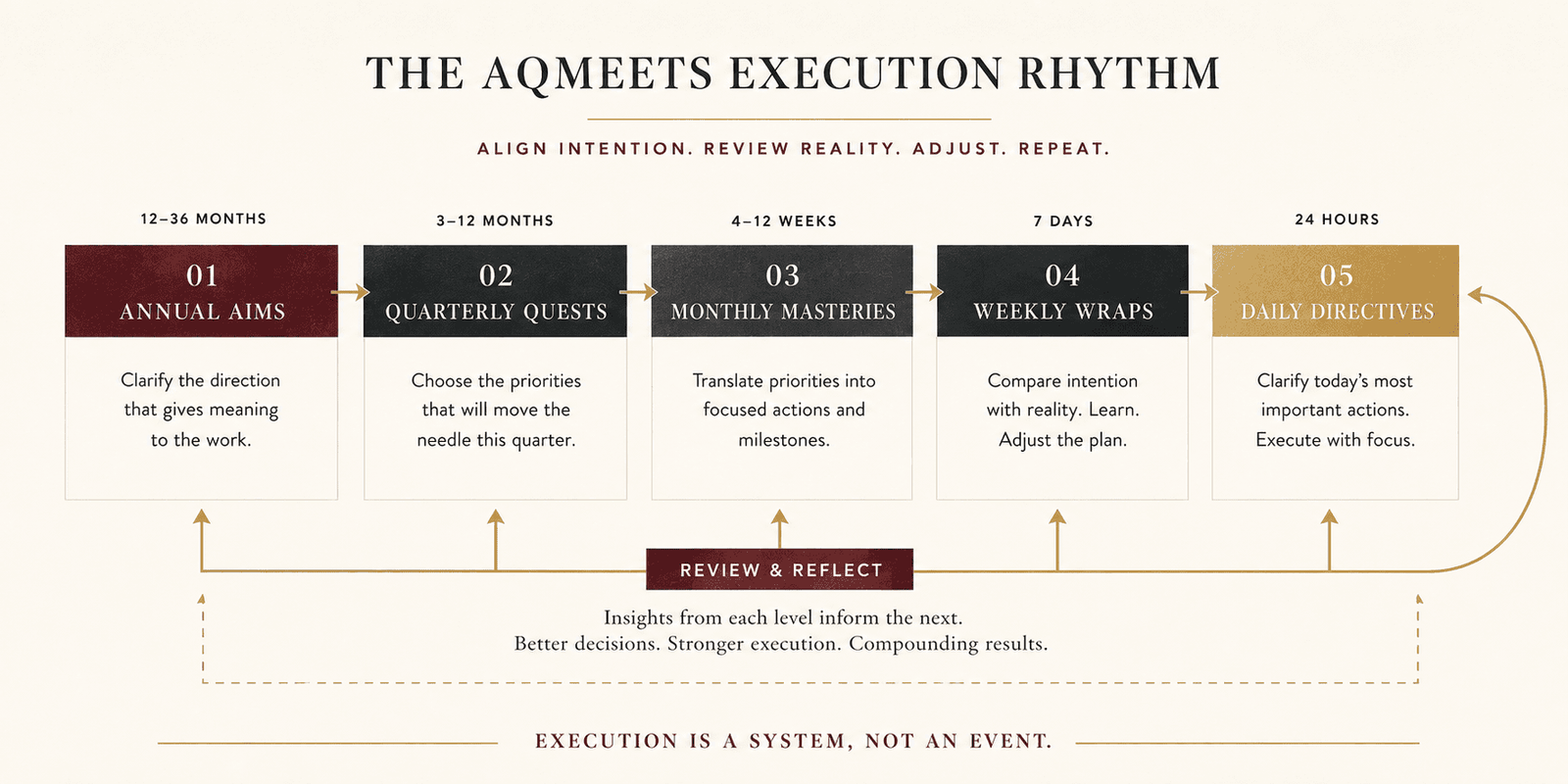
Each level returns the plan to evidence. You can see what moved, what did not, and what deserves a different approach next time.
Five movements guide the review.
AQMeets uses iRAPP to examine the gap between what you meant to do and what the week produced.
Intention
What were you trying to accomplish?
Reality
What actually happened?
Analysis
What can you learn from the difference?
Planning
What should happen next?
Peers
Where would another person seeing the commitment improve follow-through?
A missed commitment contains useful information when you examine the cause. Completion gives you evidence too. Both should influence the next plan.
A planner can hold the commitment. It cannot review the week for you.
You may already have the task written down, scheduled, tagged, colour-coded, or sitting in a project board.
Those tools can show what you planned. They do not automatically show why the work stalled, what displaced it, or whether the next week should be planned differently.
AQMeets adds a recurring review around the tools you already use. The work is compared with the intention, and the gap becomes something you can examine.
Follow-through improves when the commitment stays visible long enough to be acted on, reviewed, and corrected.
You see your result before deciding anything else.
When you finish, you receive your Execution Zone: Drift, Busy, Rhythm or Compounding.
Your result explains the pattern suggested by your answers, where follow-through is most likely weakening, and what a stronger working rhythm would involve.
You can then decide whether AQMeets is relevant to what you want to improve.
There is no need to choose a membership before seeing your result.

A few practical answers.
Why can follow-through fail even when I genuinely care?
Is poor follow-through just procrastination?
I already use a planner or task app. Would AQMeets replace it?
Does AQMeets use accountability?
Is the Scorecard free?
Do I have to join AQMeets after the Scorecard?
See where your follow-through keeps weakening.
Take the Execution Scorecard and examine what happens to important commitments after the plan meets the week.
Free • 14 questions • about 3 minutes