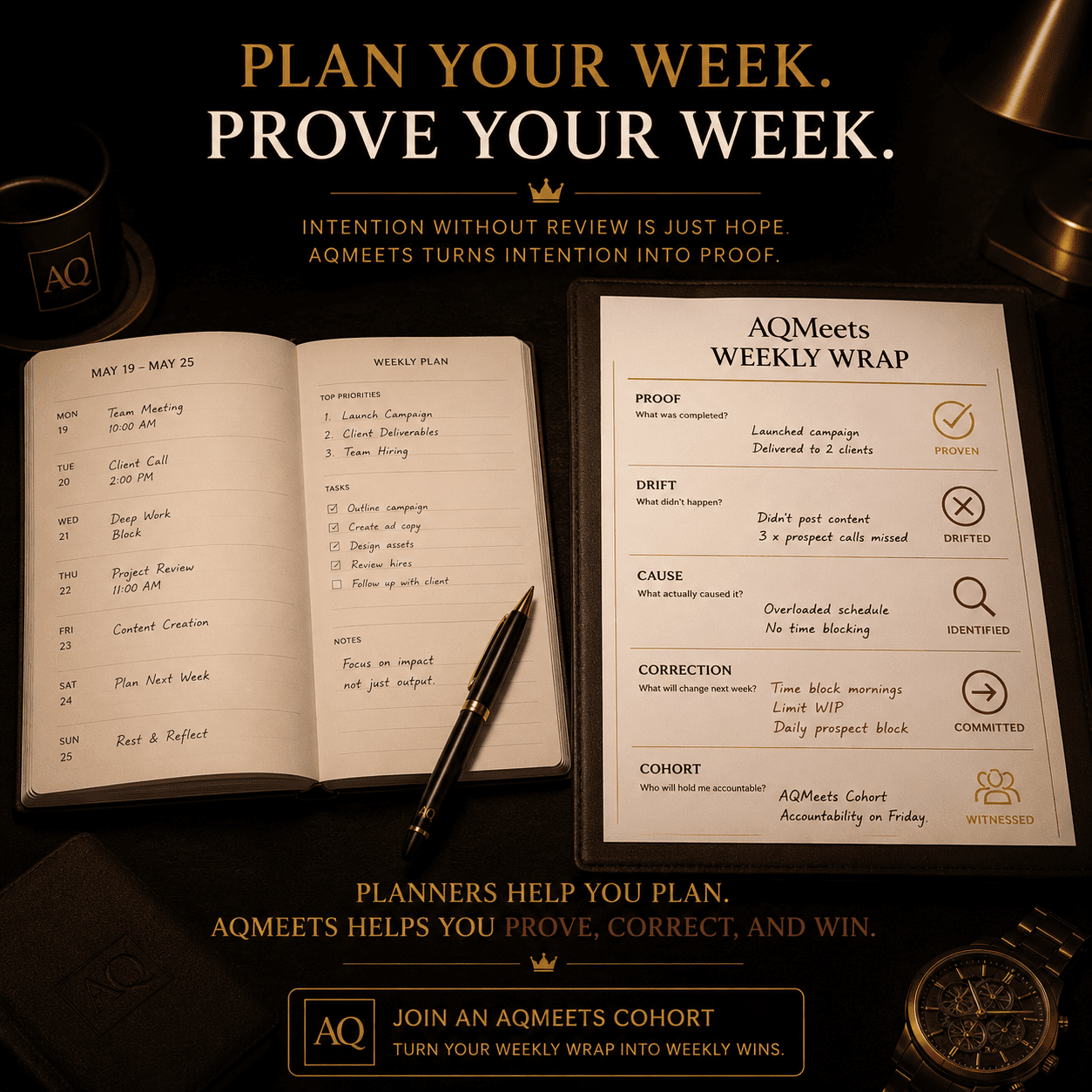
A clean planner can still leave you with a thin week.
Planners help you prepare the week. AQMeets helps you review what actually happened, name drift, choose correction, and build proof with a live cohort of entrepreneurs.
Many entrepreneurs try to solve execution by buying a better planner.
A cleaner layout. A sharper goal page. A quarterly spread. A habit tracker. A daily page for top priorities. A premium notebook that makes Monday feel serious.
Some of it helps. Then the week starts.
The client issue takes the morning. The inbox returns. A meeting moves. The hard decision stays vague. The sales asset waits again. The important project remains on the page, still attractive, still intended, still unfinished.
The planner did its job. It held the intention. The week did something else.
That is the problem AQMeets is built to address.
Each week, you join a live Weekly Wrap with other entrepreneurs. You review what happened, identify proof, name drift, find the likely cause, and choose correction for the next week.
The question is no longer whether you can write a cleaner plan. The question is whether the previous week told the truth.
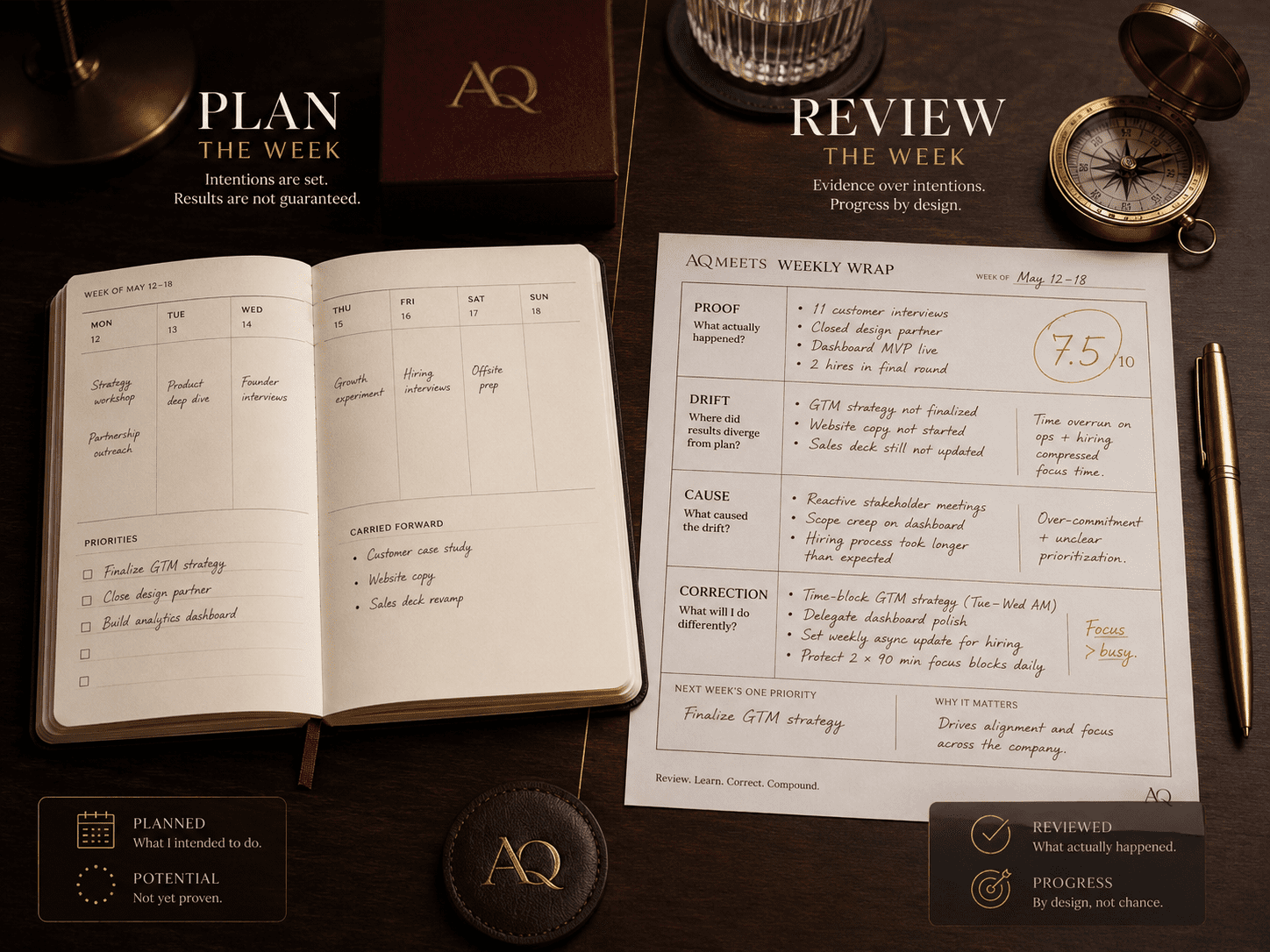
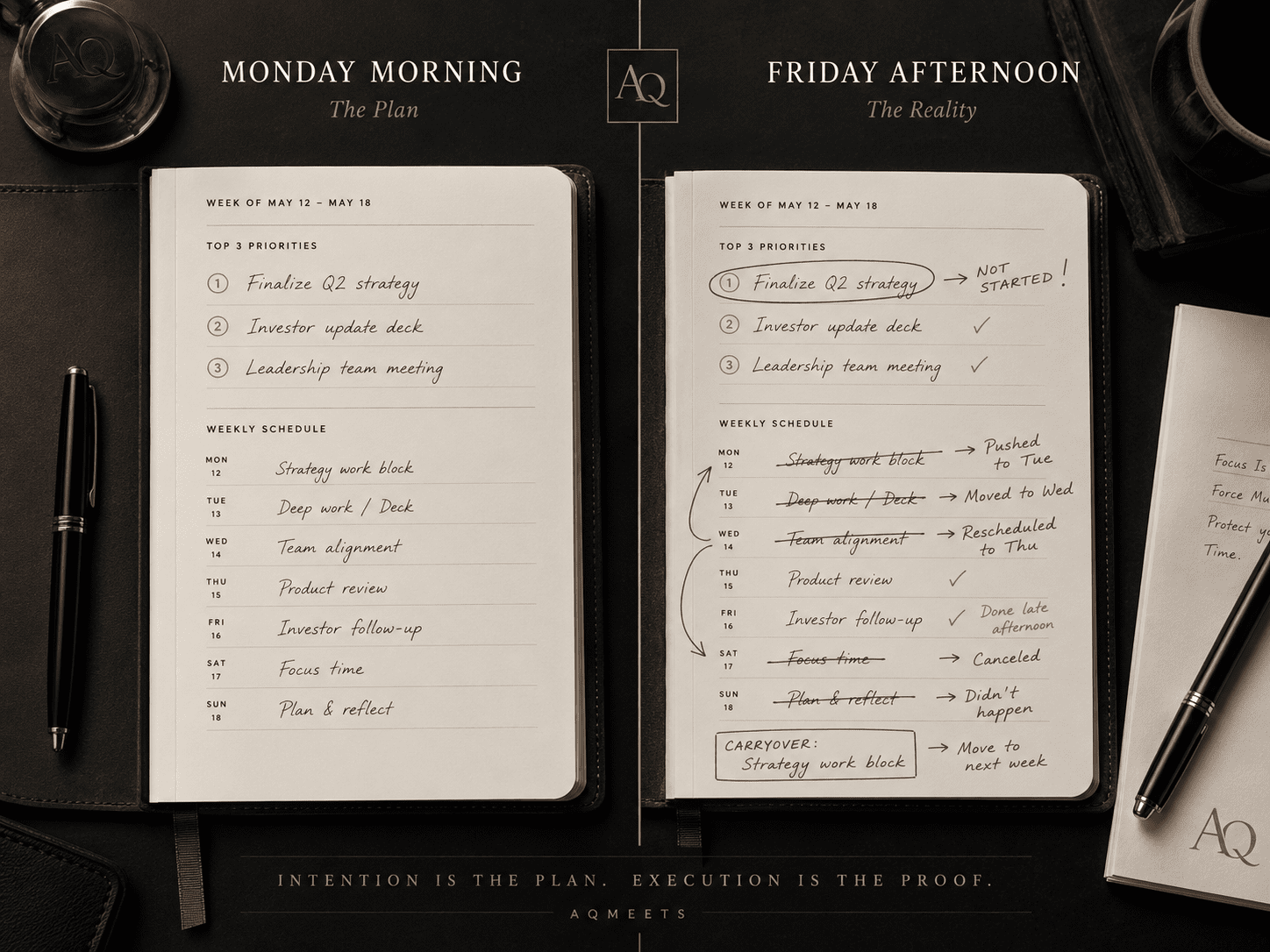
The page is full. The proof is thin.
A planner gives you a clean view of the week before reality has touched it. That can feel calming.
You write the priority. You block the time. You list the task. You name the habit. You create a neat promise to yourself.
By Friday, the planner still shows what mattered. The week shows what had authority.
That gap is where the cost sits.
The priority was visible. It was written down. It may even have been starred, boxed, circled, highlighted, or moved into the top three.
Still, it did not move.
The proposal remained untouched. The content asset stayed half-drafted. The hard conversation waited again. The strategic task sat neatly on the page while the ordinary week used the available strength.
That is the planner problem. The page can preserve intention without forcing the week to answer for what happened.
Your planner is not operating in a quiet room.
The planner may be calm. The week is not.
Messages arrive without effort. Meetings claim space. Clients bring pressure. Staff ask for decisions. Family needs interrupt clean blocks. Small tasks offer relief because they can be finished quickly. A fresh page feels easier than a hard review.
That environment favours drift.
Moving the task forward takes less courage than asking why it did not move. Rewriting the priority feels cleaner than facing the pattern. Feeling organised is easier than admitting the week has stopped obeying what matters.
This is why planning alone often fails capable people.
The issue is not indifference. The planner was tested by a stronger environment.
AQMeets creates a counter-rhythm: live review, written proof, named drift, diagnosed cause, and practical correction.
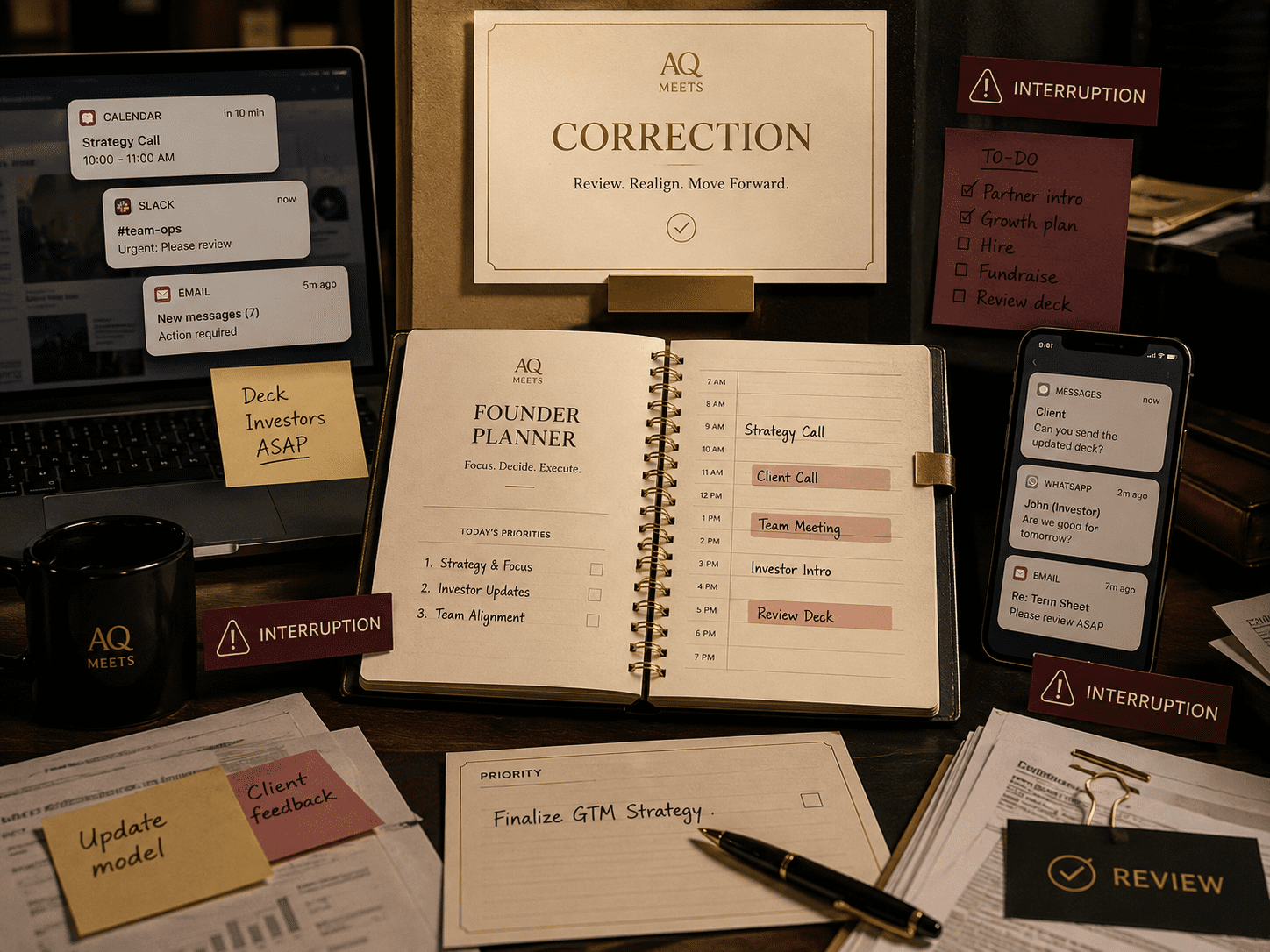
A good planner can help you think before the week begins.
Planners are useful. They can help you slow down, collect loose thoughts, name priorities, reduce forgetting, organise appointments, and decide what deserves attention before the week becomes crowded.
For some people, that is enough. If your main problem is forgetting appointments, losing track of tasks, or needing a place to see the week, use the planner. AQMeets becomes relevant when the planner is already full, yet the meaningful proof remains thin.
It captures intention
A planner gives your priorities a place to be written.
It reduces forgetting
Appointments, deadlines, and commitments are less likely to vanish.
It creates order
The act of planning can make the week feel less vague.
It gives the mind a surface
Some thinking becomes clearer once it is written.
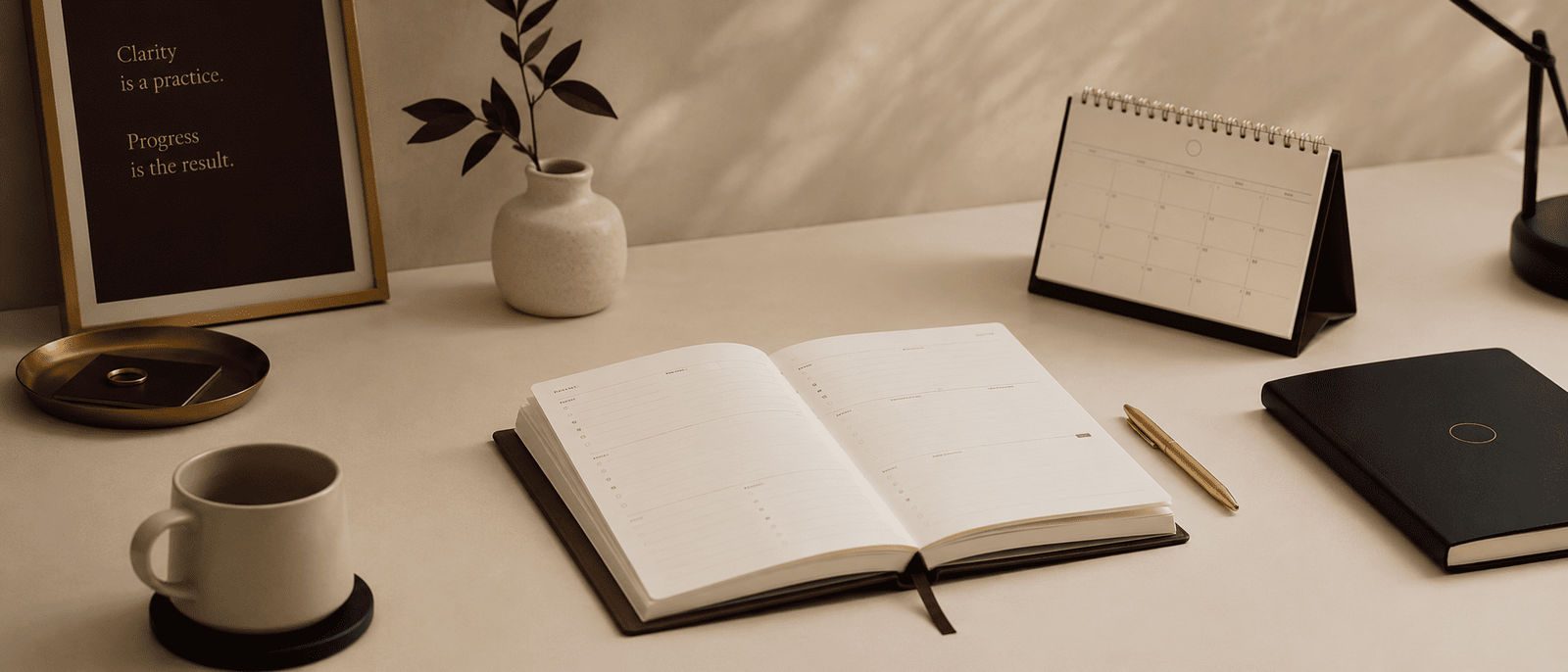
Most planners are stronger before the week than after it.
The real test of execution does not happen when the plan is written. It happens after the week has pushed against it.
What did you actually complete? What slipped? What received your best attention? What kept getting leftovers? What did you carry forward for the third week in a row?
Most planners do not make that review unavoidable.
They let you move the task forward. Rewrite the goal. Start a new page. Turn the page cleanly and feel the relief of a fresh spread.
The fresh page feels merciful. It can also erase the evidence.
Planning becomes respectable avoidance when it gives you the relief of recommitment without the discomfort of review.
A planner can help you prepare for the week. It usually does not make the week answer back.
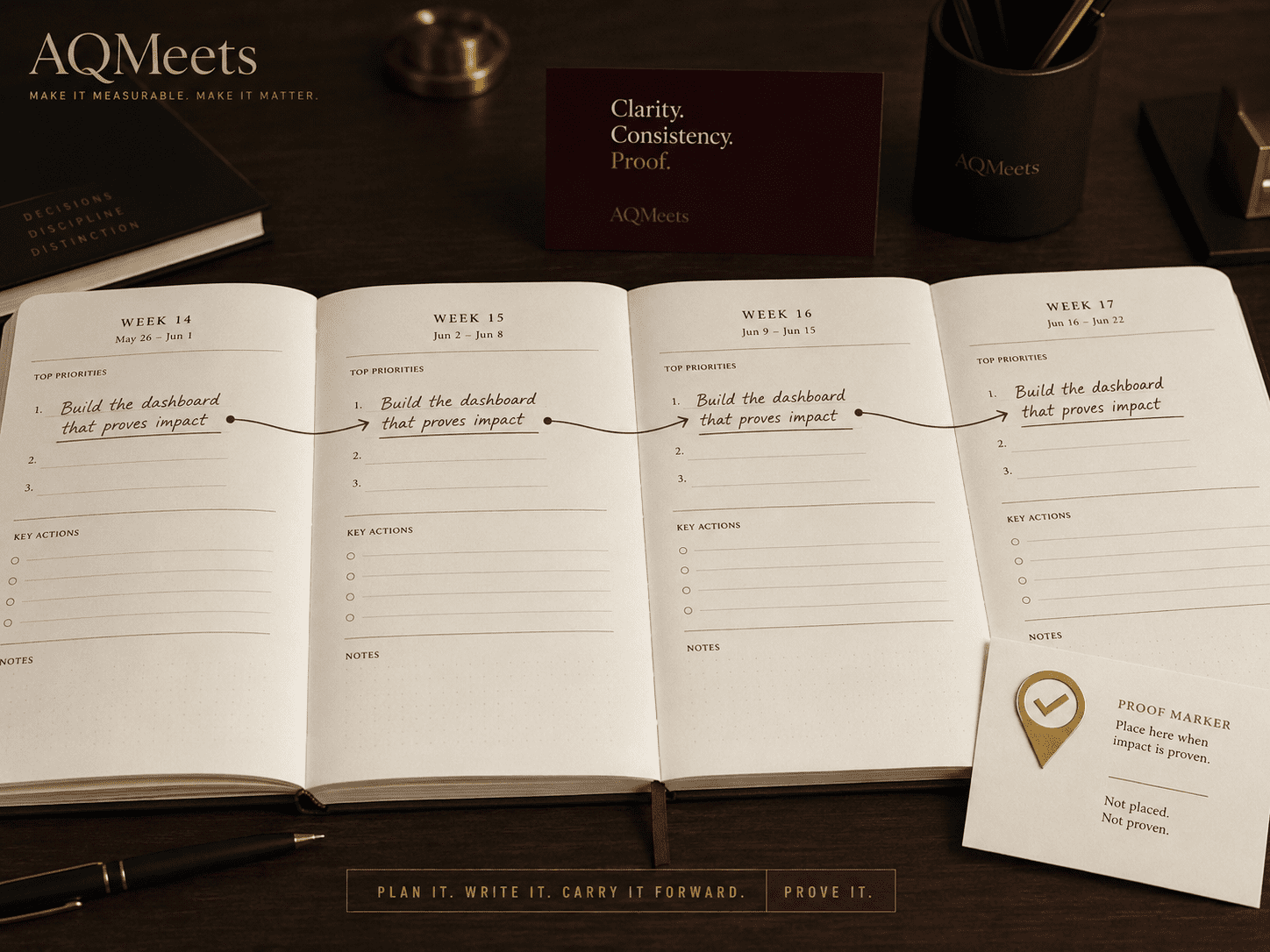
The same priority on a new page is not the same promise.
Carryover looks harmless.
You did not abandon the goal. You moved it forward. You kept it alive on paper. That is the comforting story.
The harder truth is that repeated carryover changes the force of the promise.
The first time, it feels practical. The second time, it feels familiar. The third time, it starts to lose authority.
After enough repetition, the written priority becomes part of the scenery. Something you intend, admire, rewrite, and postpone.
The cost is not only the unfinished task. The cost is the weakening of the next promise.
One week of carryover becomes four. Four become a quarter. The planner begins to record the very drift it was meant to solve.
This is a system problem. A planner lets the priority move forward. AQMeets asks why it keeps moving forward without proof.
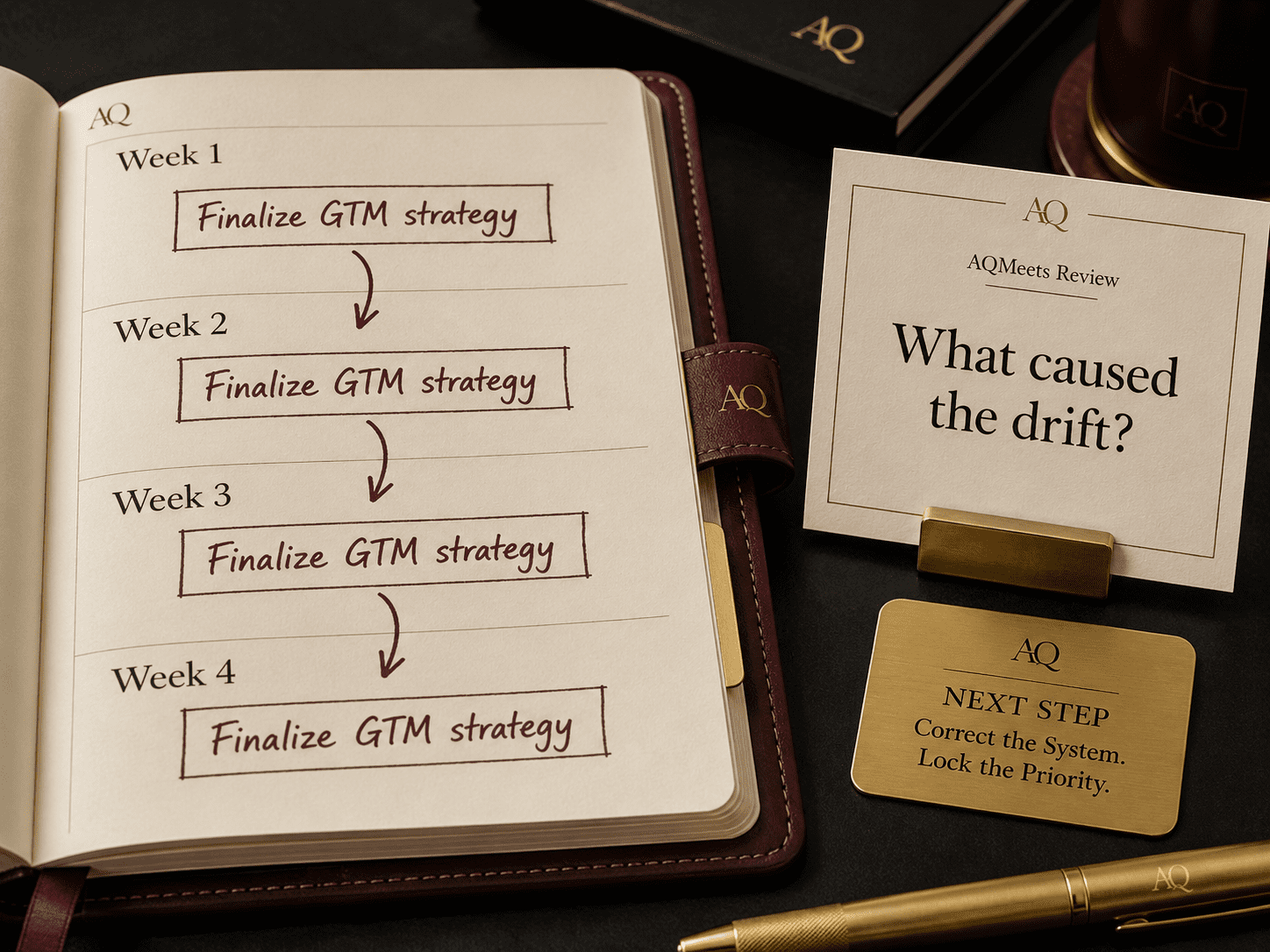
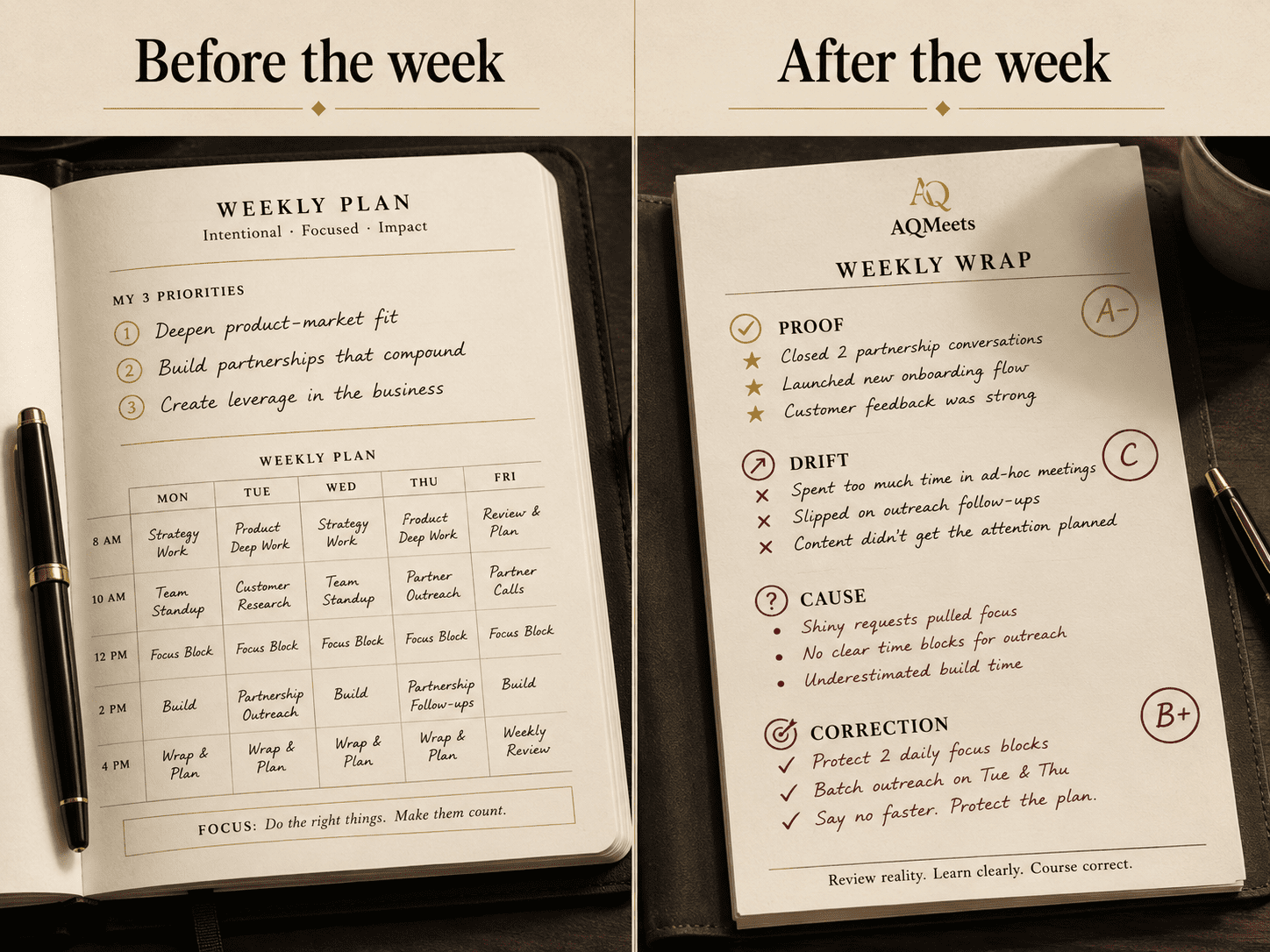
A planner faces the coming week. AQMeets faces the actual week.
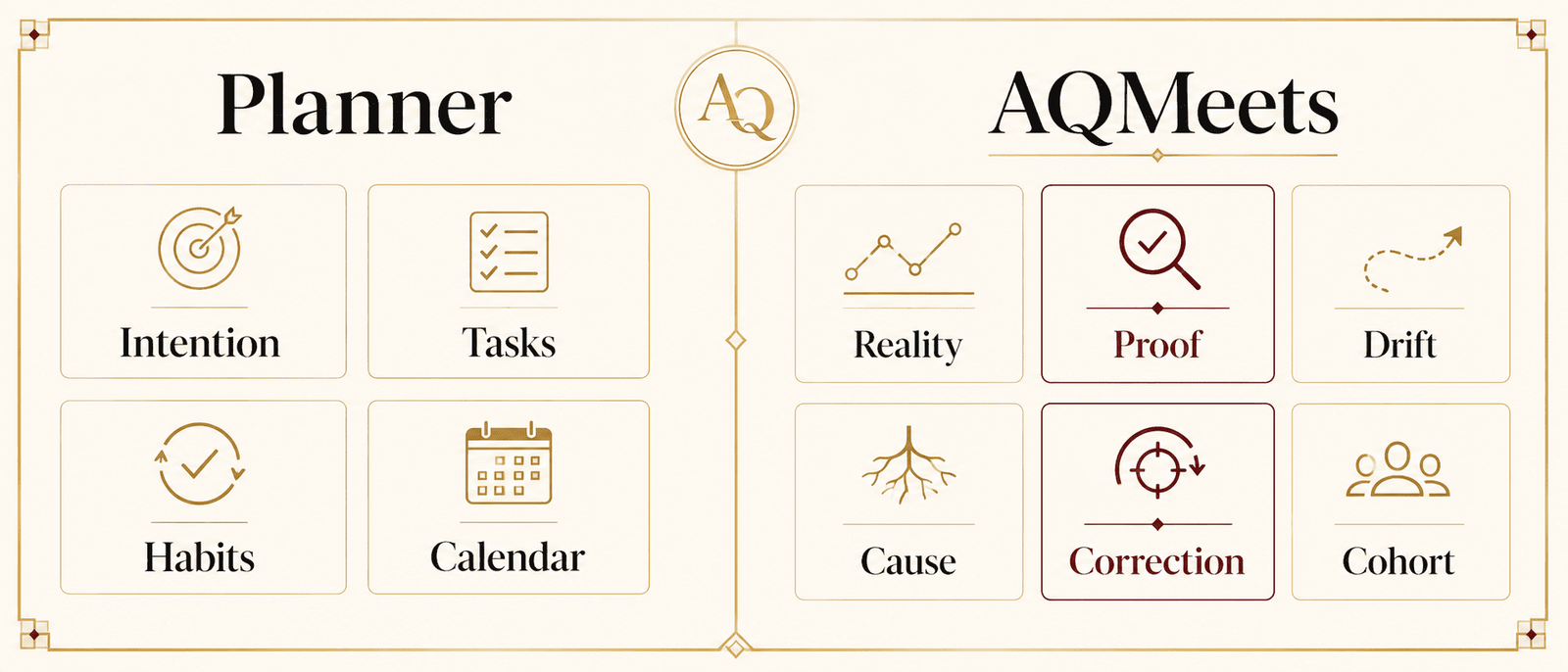
Most planners are strongest before action. They ask what you want to do, what matters, what appointments you need to remember, what habits you want to track, and what tasks should go where.
AQMeets begins after the week has happened.
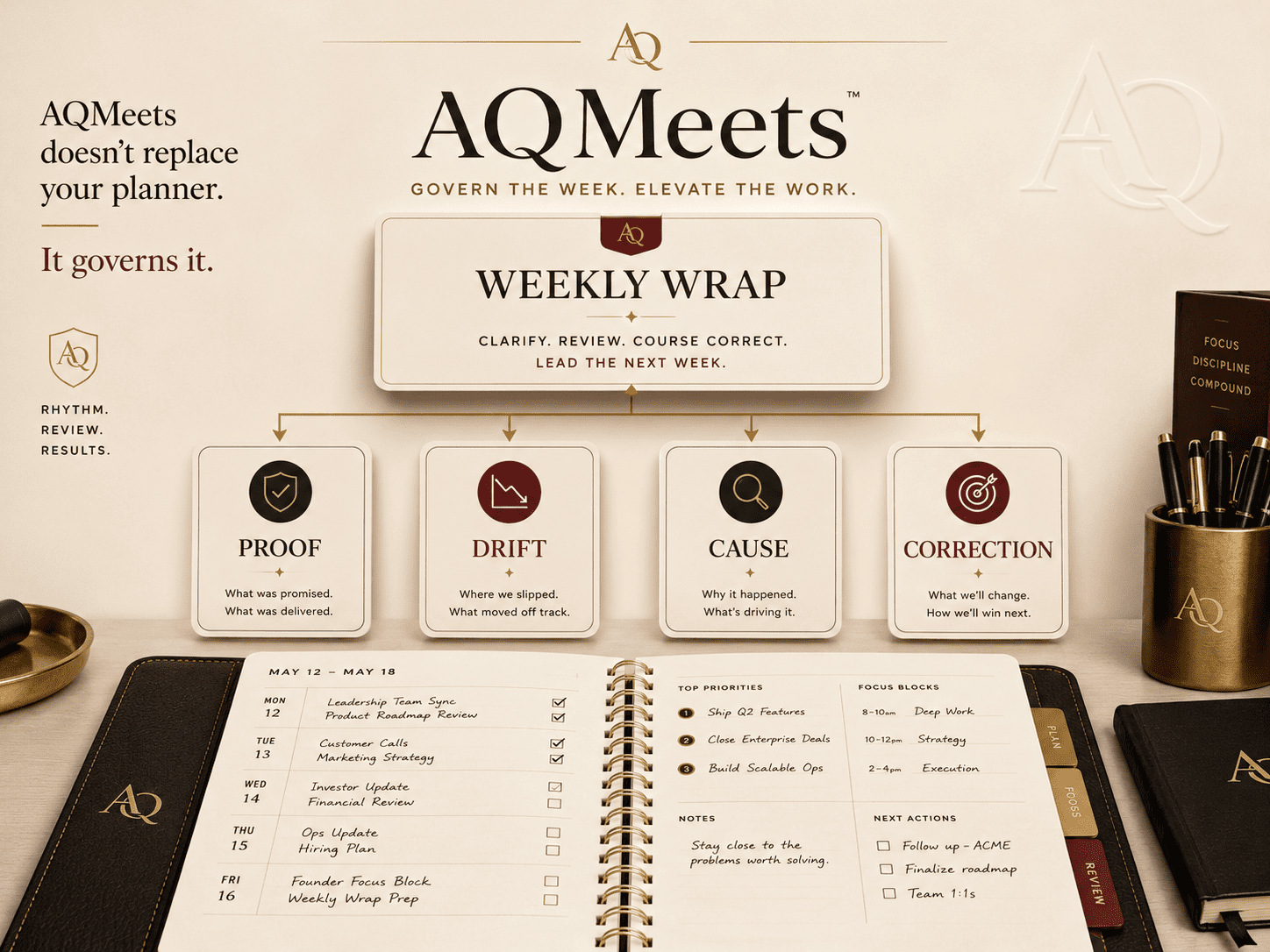
In the Weekly Wrap, you review what the week proved. You name where drift appeared. You look for the likely cause. You choose a correction for the next week.
You do this live, with other entrepreneurs under the same standard.
The planner asks: What will you do?
AQMeets asks: What happened, what did it prove, and what must change now?
That second question is harder to avoid. It is also the question that protects self-government.
A serious builder cannot keep letting the page say one thing while the week proves another.
What a planner gives you, and what AQMeets adds.
This is why the choice is not paper versus program. The real difference is whether the system stops at intention or continues into review. Many entrepreneurs do not need another fresh page. They need the previous page to tell the truth.
Keep your planner. Give it a stronger rhythm to answer to.
AQMeets does not need to replace your planner.
Your planner can still hold appointments, tasks, notes, meeting times, family logistics, and daily priorities. But your planner should not be the final judge of execution.
AQMeets sits above the planner as a live review-and-correction rhythm.
At the end of the week, the question is no longer whether the planner was filled.
The question becomes: What did the week prove? What drifted? Why did it drift? What correction needs to shape next week?
That rhythm gives your planner a higher standard.
Instead of becoming another place where intentions are rewritten, the planner becomes one useful tool inside a larger execution system.

A private planner can let drift stay private.
A private planner is easy to edit.
You can move the task. Rewrite the priority. Skip the review. Start a fresh page. Close the book.
No one sees the pattern.
That privacy can feel merciful. It can also protect the drift.
AQMeets brings the review into a live room with other entrepreneurs.
You are not there to perform success. You are there to face the week honestly.
Other people bring their own real weeks into the same process. Their pressure, delays, proof, and corrections help you see your own more clearly.
You hear another entrepreneur name the same carryover pattern. You realise your private exception is not unique. The correction becomes less theoretical.
The room changes the standard. The priority is no longer only a private note. It becomes a reviewed commitment.
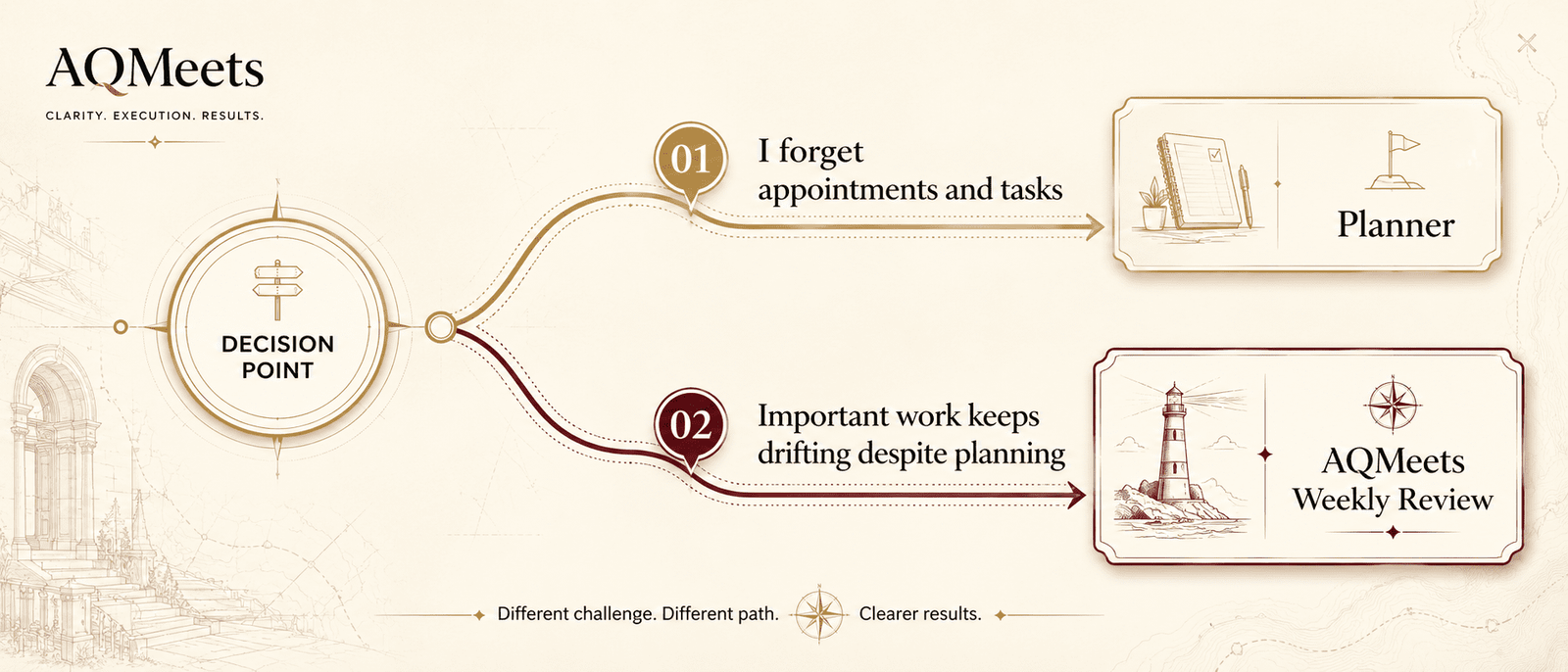
Use a planner for remembering. Use AQMeets when meaningful work keeps drifting.
A planner may be enough if your main issue is remembering appointments, seeing the week, writing tasks, or keeping track of simple commitments.
But if the same meaningful work keeps moving forward, the issue is probably deeper than forgetting. If the planner is full but proof is thin, the issue is execution. If the quarterly aim keeps appearing in your notes but not in your week, the issue is rhythm. If the private reset keeps weakening, the issue is review and correction.
When you need to remember
You mostly need to remember appointments, deadlines, tasks, and simple commitments.
When proof is thin
You already plan, but the meaningful work keeps slipping without enough proof.
Before the week
The issue is clarity before the week begins.
After pressure
The issue is what happened after the week applied pressure.
A planner may show the week. AQMeets connects the week to the year.
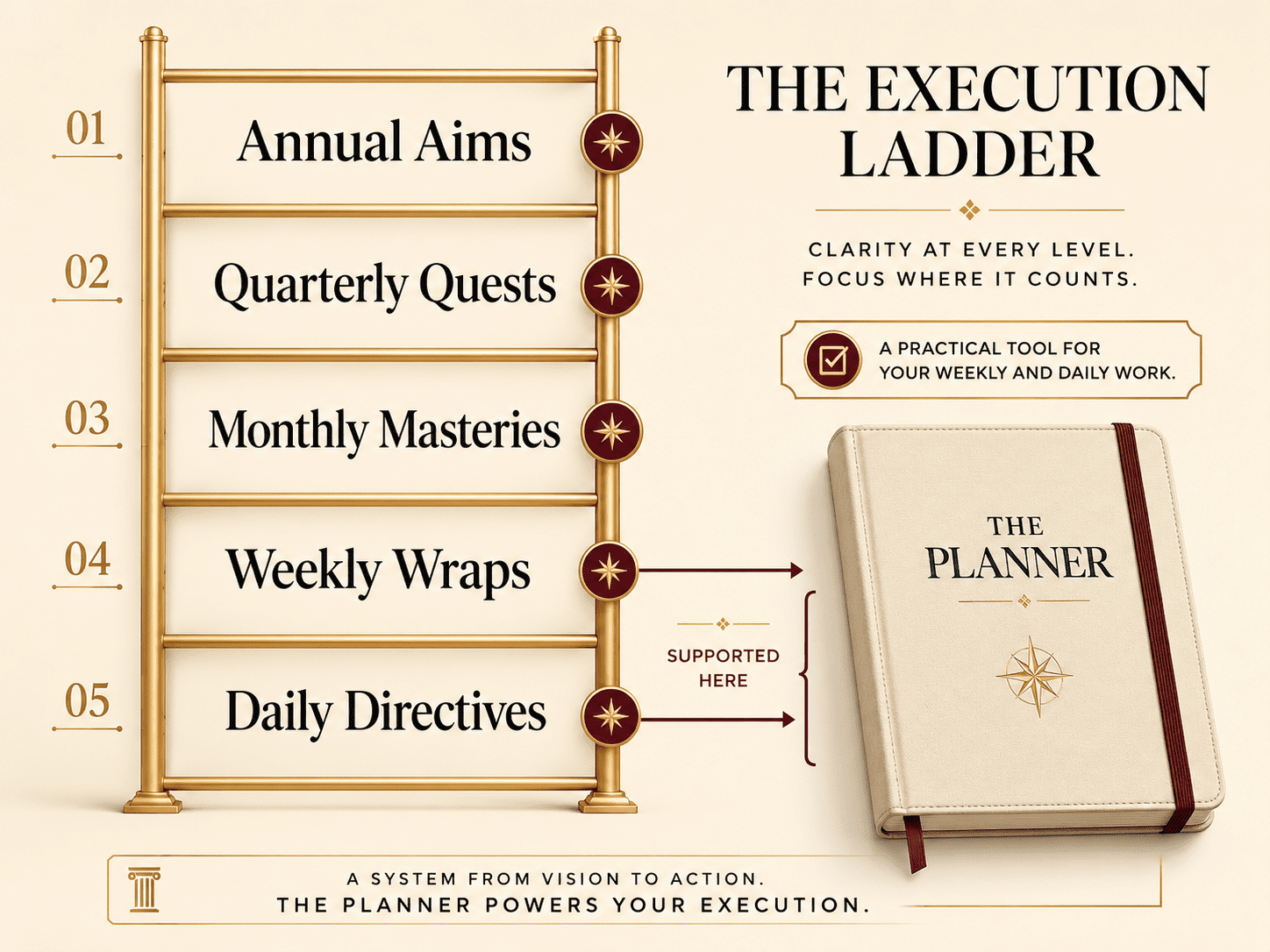
A planner can help you see the next seven days. Serious execution needs a larger rhythm.
The year gives direction. The quarter gives focus. The month strengthens capacity. The week reviews reality. The day carries correction into action.
Annual Aims
Set direction before urgency writes the year for you.
Quarterly Quests
Turn larger aims into focused 90-day campaigns.
Monthly Masteries
Strengthen the habit, virtue, or capacity needed for the current season.
Weekly Wraps
Review what actually happened and choose correction.
Daily Directives
Carry the correction into the next day’s action.
Planner’s role
A planner can support this rhythm. It should not be mistaken for the rhythm itself.
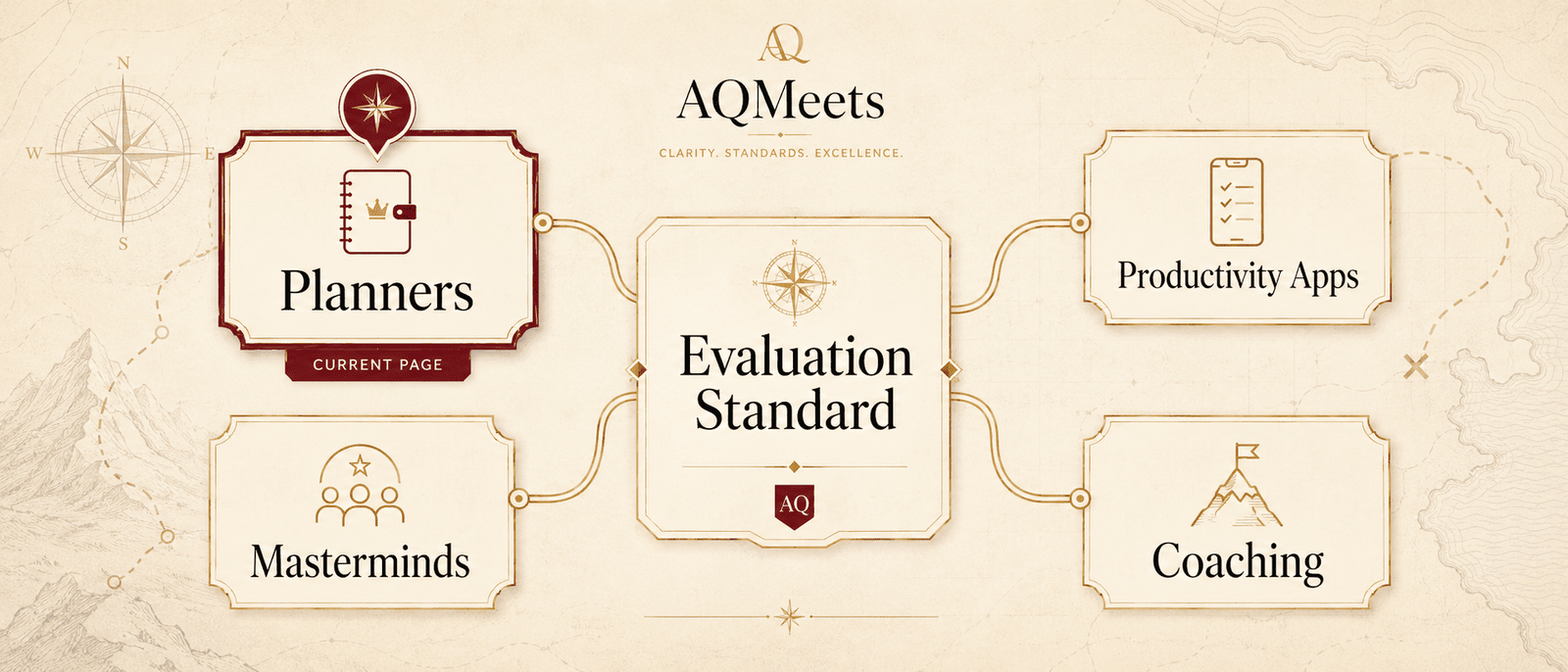
Planners are one substitute. Other tools have their own limits.
The same evaluation standard applies to other common substitutes: apps, masterminds, coaching, and AQMeets itself.
AQMeets vs Productivity Apps
For entrepreneurs who manage many tasks but still feel the meaningful work drifting.
AQMeets vs Masterminds
For entrepreneurs who value peer conversation but need a room built around review, correction, and proof.
AQMeets vs Coaching
For entrepreneurs who may receive good guidance but still need a recurring execution rhythm.
How to Evaluate an Execution System
Return to the full standard for judging planners, apps, masterminds, coaching, and AQMeets.
If your planner keeps receiving the same unfinished priority, do not just buy a cleaner page.
The layout may be innocent. So may the paper, the template, the cover, and the habit tracker.
The issue may be that the week is not being reviewed with enough honesty to change the next one.
A week feels small until the same page is rewritten twelve times. By then, the quarter has not failed dramatically. It has simply been absorbed by carryover.
AQMeets gives you a live place to face that week.
You review what happened. You name proof. You expose drift. You find the likely cause. You choose correction with other entrepreneurs doing the same work.
A planner can still help you prepare. AQMeets helps the week answer back.