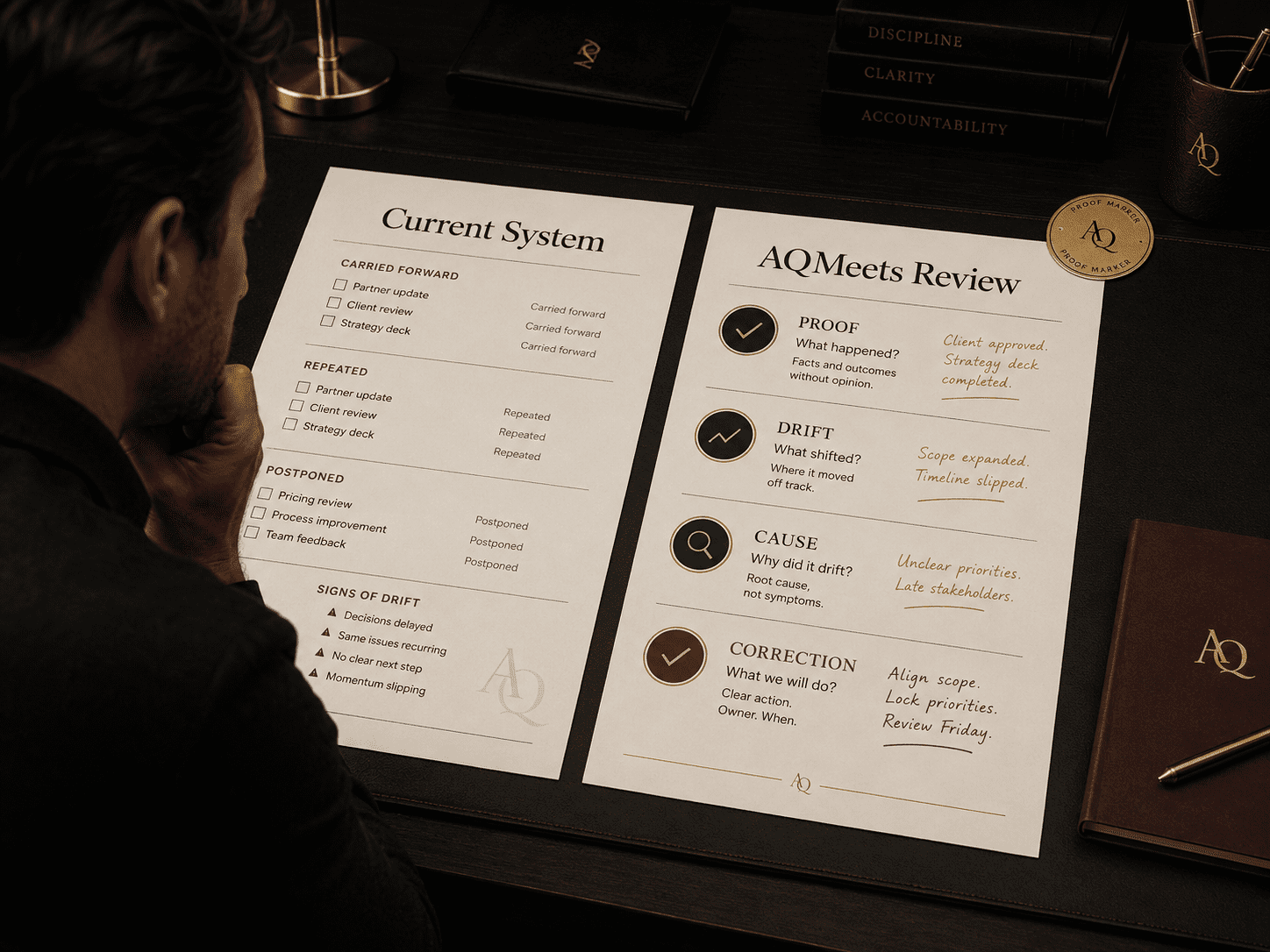
Your system may be organised. Your execution may still be weak.
Before you choose another planner, productivity app, mastermind, or coaching program, test whether your current system reviews reality, exposes drift, forces correction, and produces proof.
Many entrepreneurs already have tools: a calendar, task list, planning app, notebook, saved courses, business group, and a private weekly reset habit.
Some of it helps. The harder test comes when the week applies pressure.
A system can hold your tasks and still fail to protect your priorities. It can make Monday look cleaner while the important work keeps waiting.
AQMeets uses a stricter test: review the week, record proof, name drift, examine cause, and choose correction live with a cohort of entrepreneurs.
If your current system cannot do that, it may be managing activity while leaving execution exposed.
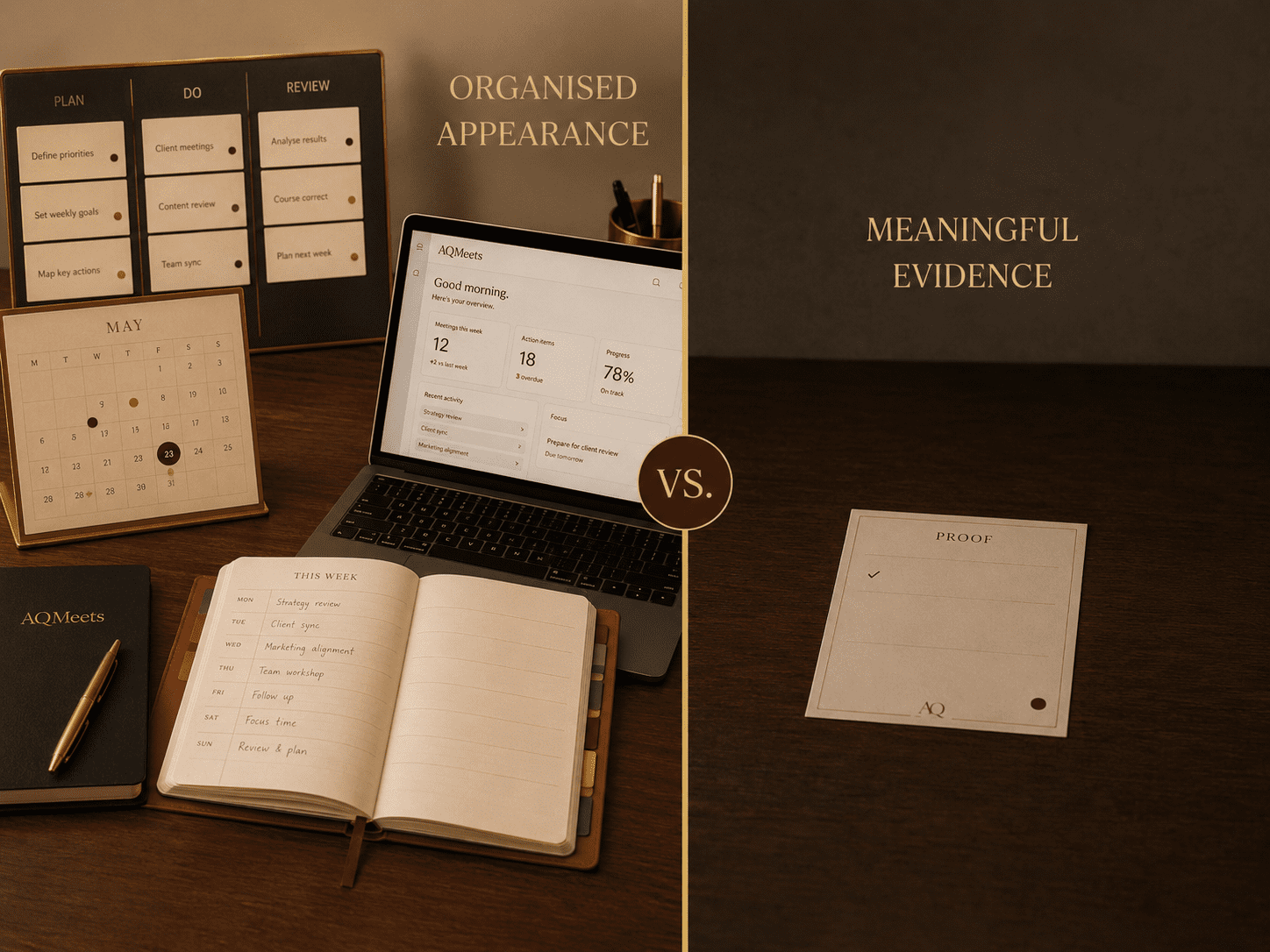
A system can make drift look organised.
A system can make you feel serious. You wrote the list, reviewed the goals, moved the unfinished task forward, reorganised the board, and promised yourself the next week would be cleaner.
Then the week arrived.
The client issue took the morning. The meeting ran long. The hard decision stayed vague. The sales asset did not get finished. The meaningful project remained close enough to discuss, but not close enough to prove.
The system was there. The proof was thin.
Is your system changing the week, or only recording what the week already did to you?
Storage is not execution.
Most tools are judged by capacity.
How many tasks can it store? How many projects can it organise? How many templates are included? How easy is it to move things around? How many integrations does it have?
Those features may help.
They do not prove execution.
A weak system can hold a large number of goals, projects, tasks, reflections, and notes. It can look impressive while the same important work keeps moving to next week.
A serious execution system has to answer harder questions.
- Did it show what actually happened?
- Did it separate activity from proof?
- Did it expose drift before the pattern repeated?
- Did it force a correction for the next week?
- Did it work when the week became crowded?
A system that fails those questions may still help with organisation. It is too weak to govern execution.
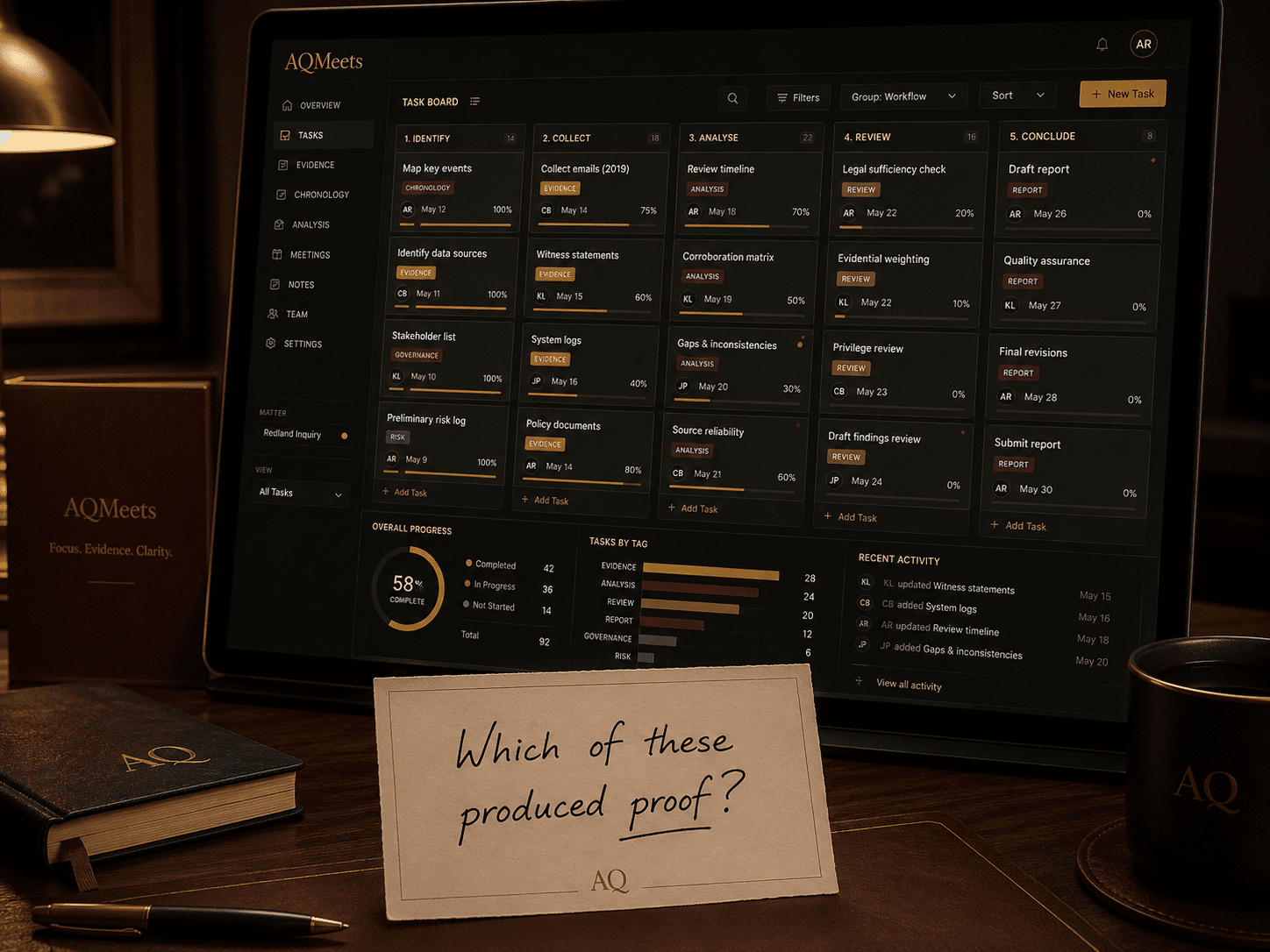
Most substitutes solve one piece of the problem. They do not always correct the week.
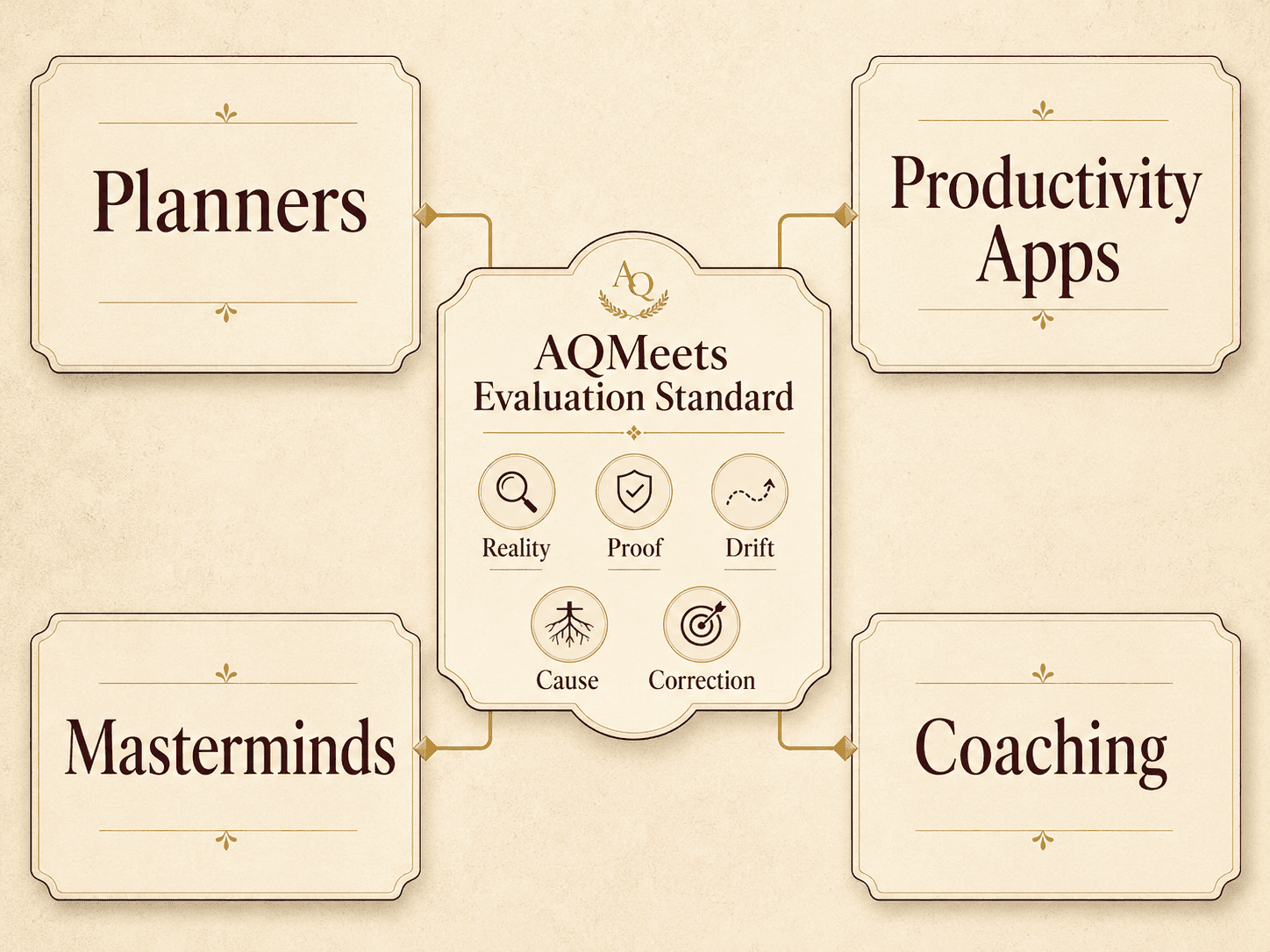
This page gives you the evaluation standard. The comparison pages apply that standard to the tools and programs entrepreneurs usually try first.
AQMeets vs Planners
Planners can hold intention. The question is whether they review reality, expose drift, and force correction once the week has happened.
AQMeets vs Productivity Apps
Apps can organise tasks. The question is whether they distinguish activity from proof and keep larger aims from becoming another managed list.
AQMeets vs Masterminds
Masterminds can create conversation and perspective. The question is whether the room is structured around review, correction, and weekly proof.
AQMeets vs Coaching
Coaching can provide guidance. The question is whether the entrepreneur has a recurring execution rhythm that turns insight into reviewed action.
Do not ask only, “Which tool feels useful?”
Ask which option can survive the pressure of an ordinary week: client demands, fatigue, interruptions, avoidance, shifting priorities, and the quiet habit of moving the same work forward again.
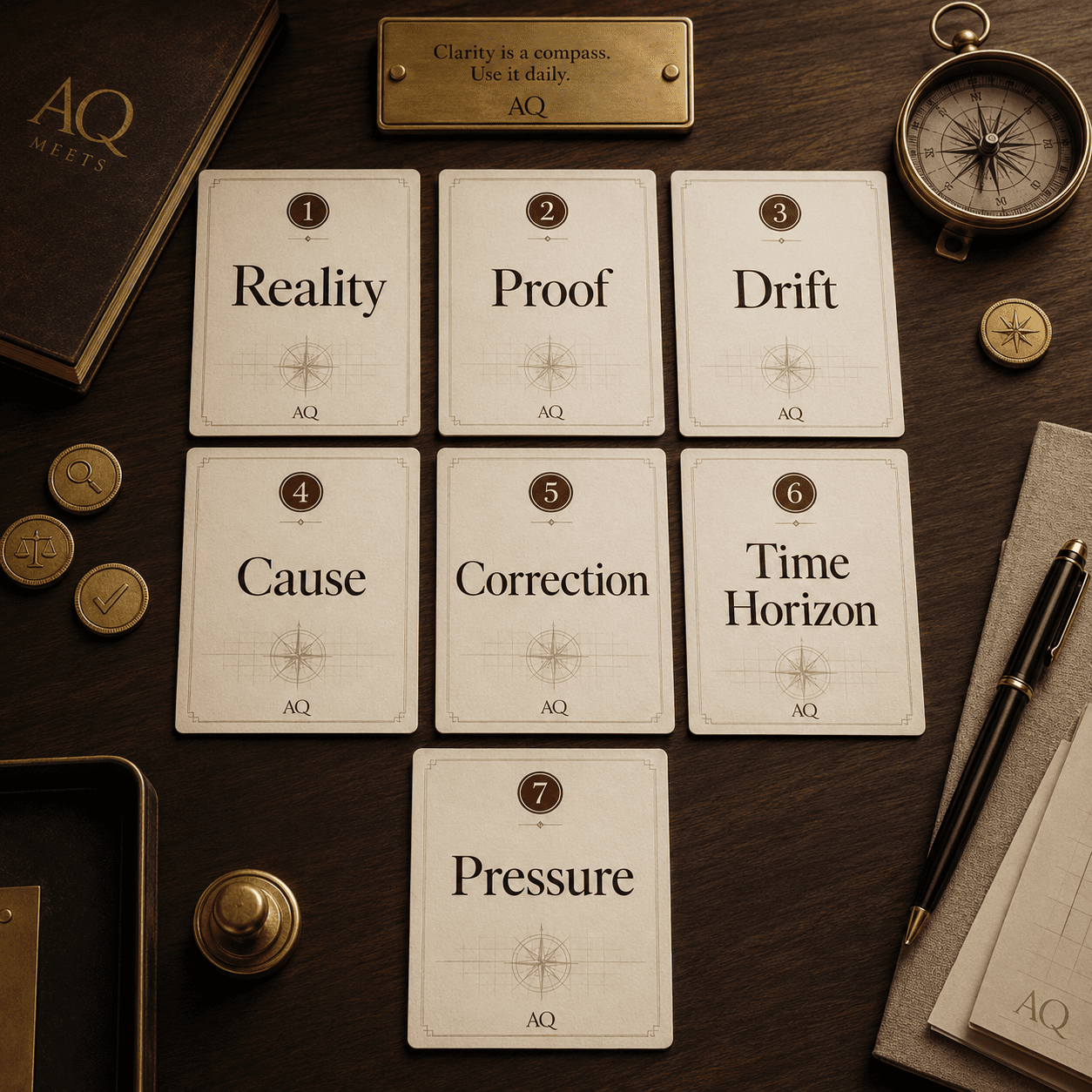
That is why the comparison pages matter. They judge each substitute by the same standard: reality, proof, drift, cause, correction, live witness, and continuity across time.
A real execution system has to survive the week.
The test is not how impressive the system looks when life is quiet.
The test is what happens by Thursday, when the client has pushed back, the inbox is full, the original priority is still untouched, and the week is starting to justify itself.
It reviews reality
It shows what actually happened, not only what you intended. If reality stays vague, drift stays protected.
It separates activity from proof
It distinguishes busy work from meaningful evidence. A full calendar is not always a strong week.
It exposes drift early
It helps you name where the week moved away from what mattered before the pattern hardens.
It diagnoses cause
It asks why the drift happened. Unclear priority, vague next action, overcommitment, interruption, fatigue, and avoidance do not need the same correction.
It forces correction
It leads to a specific change in the next week. Review without correction becomes commentary.
It connects time horizons
It links the year, quarter, month, week, and day. Otherwise the week is ruled by urgency.
It works under pressure
It still functions during real weeks: client pressure, tired evenings, staff problems, household demands, delayed replies, and broken plans.
The stricter standard
A system that cannot help you see reality, name drift, choose correction, and build proof is too weak for serious execution.
AQMeets was built around the tests weak systems avoid.
AQMeets does not begin with another place to collect tasks.
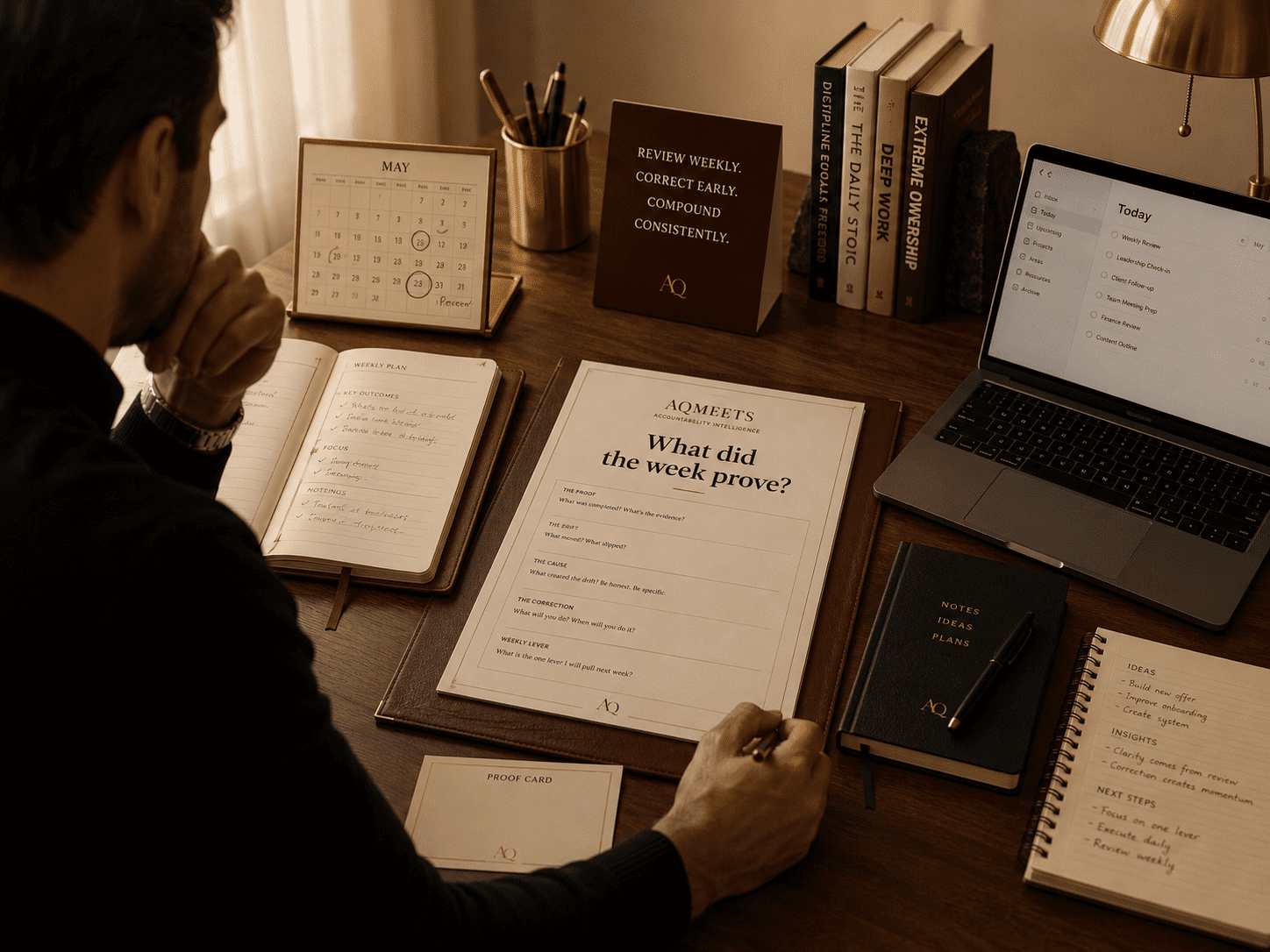
It begins with the question most systems allow you to skip: What did the week prove?
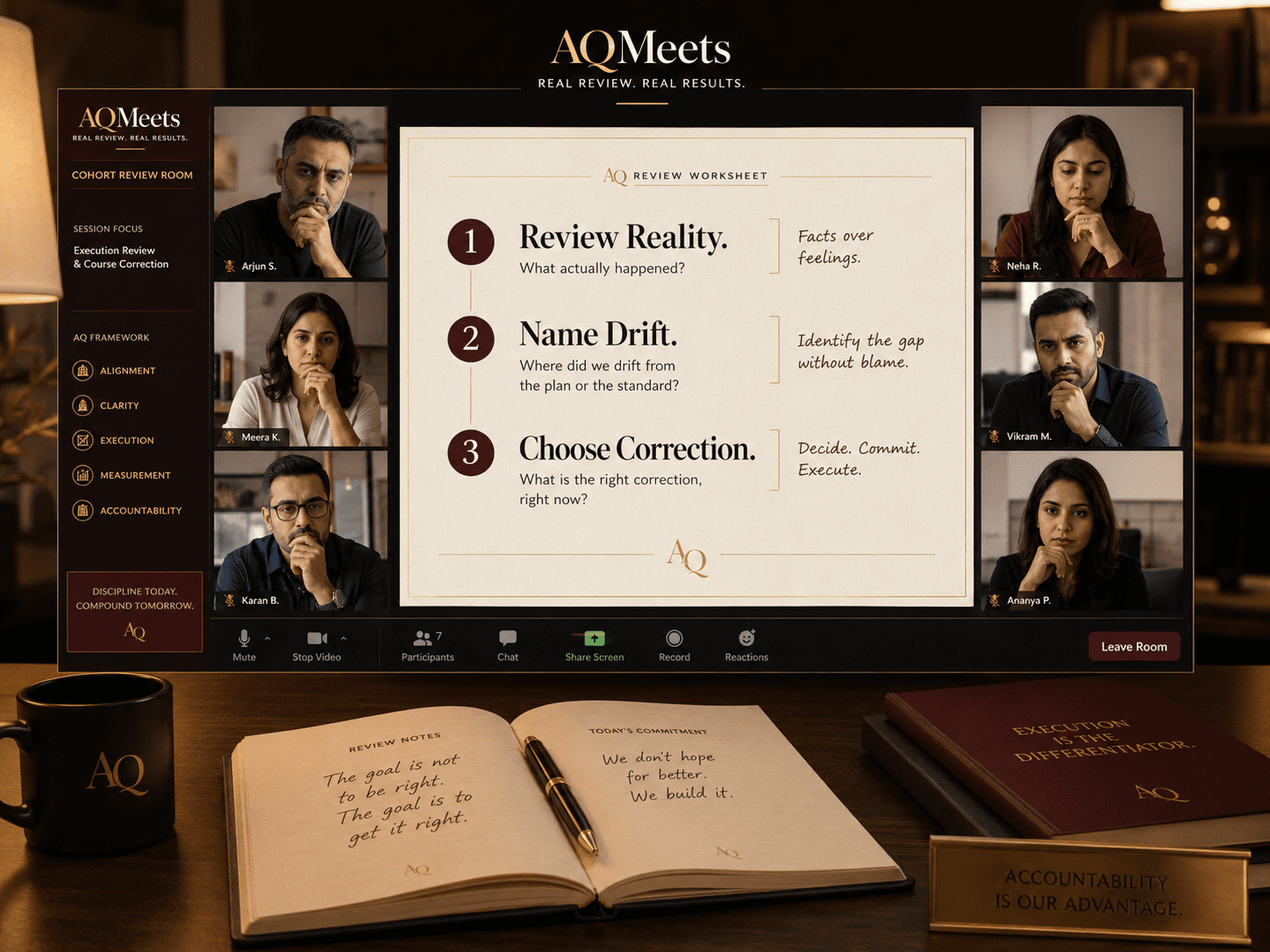
In the Weekly Wrap, you review reality before you plan again. You identify proof, name drift, look for the cause, and choose correction before Monday begins.
The live cohort matters because private systems can be edited quietly. You can move the date, rename the task, delete the embarrassing item, and start again without anyone seeing the pattern.
AQMeets gives the pattern a room.
You may still use your planner, calendar, task app, notebook, course notes, coach, or business group. AQMeets gives those tools a governing rhythm and asks whether they are producing proof.
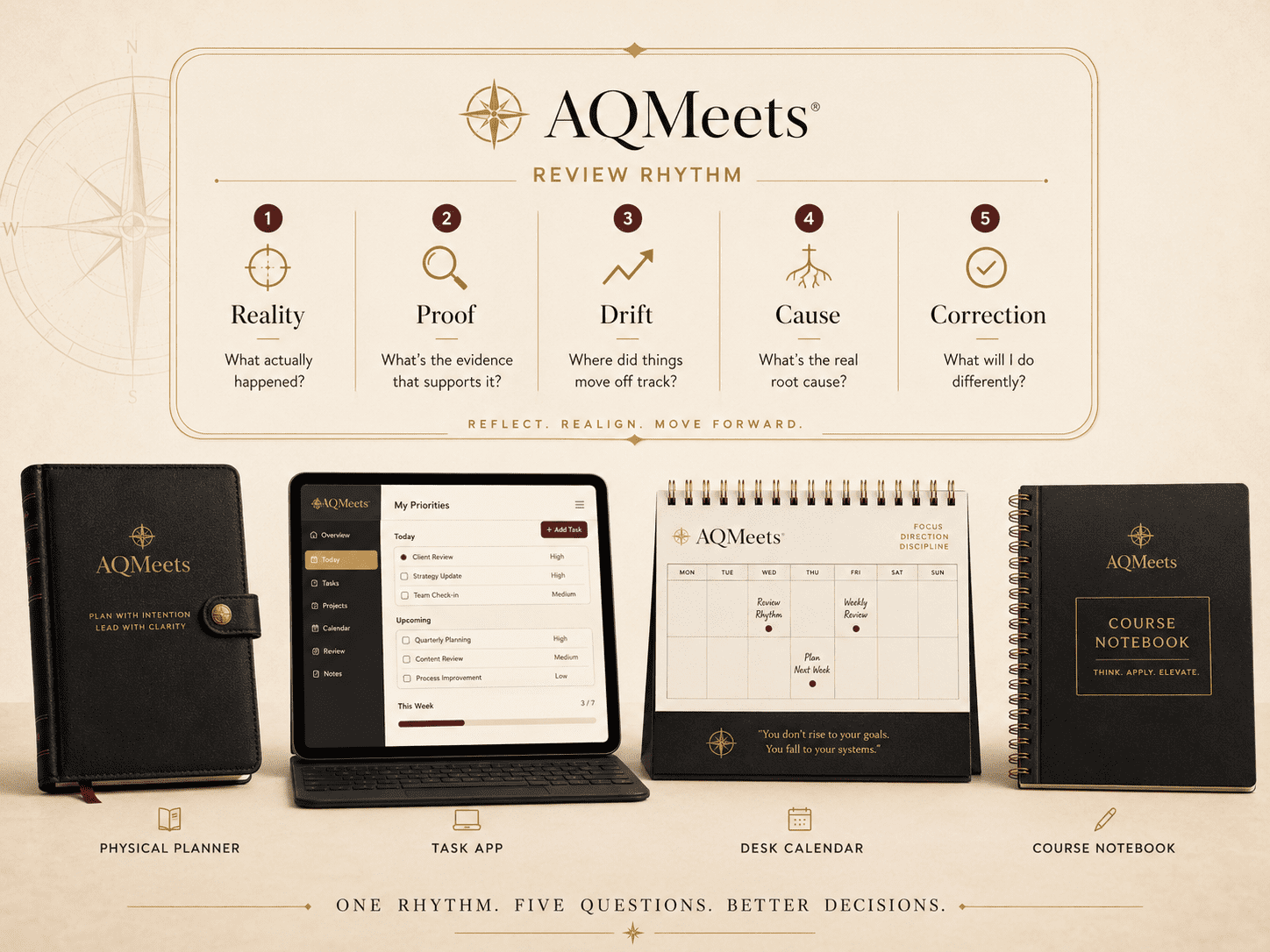
Weekly Wrap
Reviews the real week before the next week begins.
Proof
Separates meaningful evidence from general activity.
Drift
Names where the week moved away from what mattered.
Cause
Looks for the reason the drift happened.
Correction
Turns the review into a practical adjustment.
Cohort
Gives the work a live room and a shared standard.
Private drift survives by staying private.
A private system can be useful. It can also protect the pattern that keeps defeating you.
Nobody sees the priority moved forward again. Nobody sees the goal rewritten. Nobody sees the calendar block disappear. Nobody hears the promise getting weaker.
Live review changes the atmosphere.
Other entrepreneurs are not there to rescue you. They are there to do the same work beside you, with their own delays, proofs, pressures, corrections, and unfinished commitments.
You hear how another founder names drift. You see how another operator chooses correction. You recognise patterns that were harder to see alone.
The work becomes less isolated, and the correction becomes more concrete.
The week needs review. It also needs a larger frame.
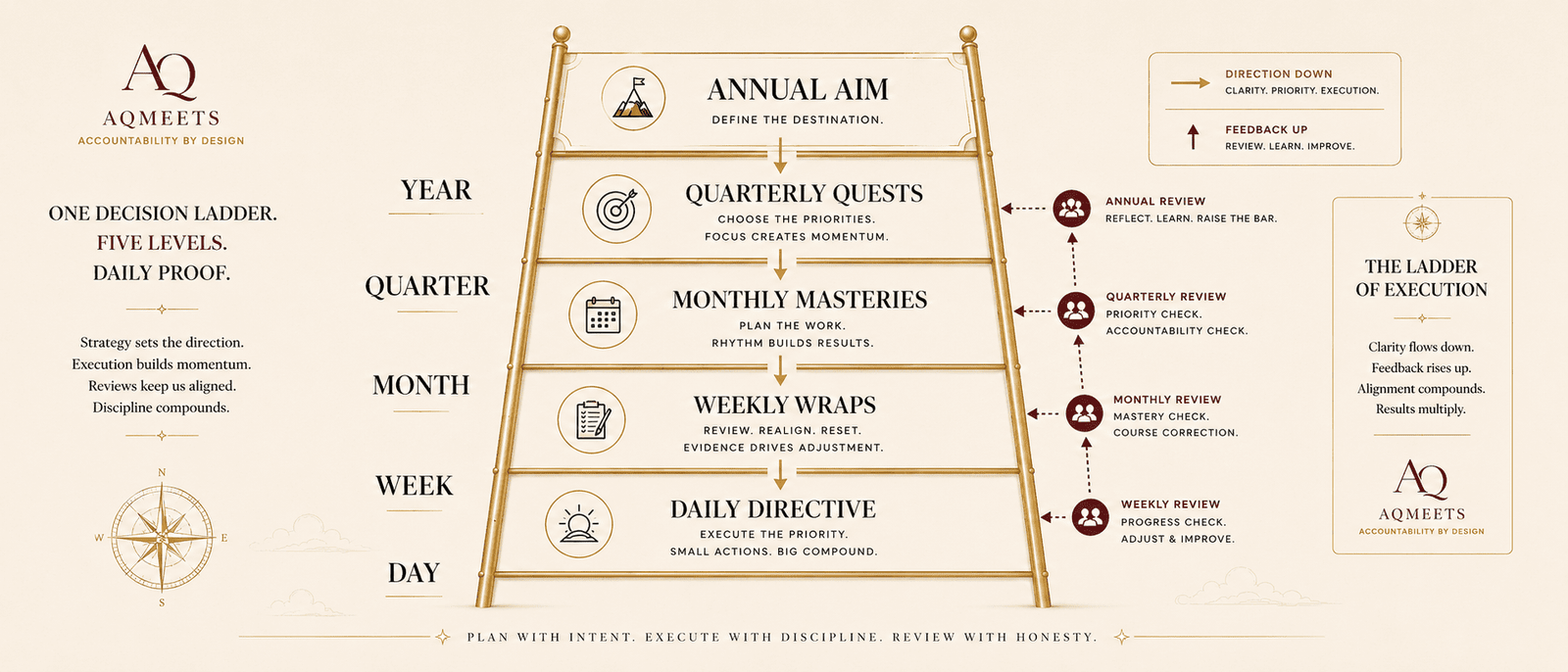
A serious execution system connects the ladder.
A year can sound meaningful while the week remains ordinary. A quarterly goal can look serious in a document and still have no authority by Wednesday. A monthly focus can be named and then forgotten. A daily list can be completed while the deeper aim goes untouched.
The year gives direction. The quarter gives focus. The month strengthens capacity. The week reviews reality. The day carries correction into action.
AQMeets works across that ladder through Annual Aims, Quarterly Quests, Monthly Masteries, Weekly Wraps, and Daily Directives.
Annual Aims
Set direction before urgency writes the year for you.
Quarterly Quests
Turn larger aims into focused 90-day campaigns.
Monthly Masteries
Strengthen the habit, virtue, or capacity needed for the current season.
Weekly Wraps
Review reality, name proof, expose drift, and choose correction.
Daily Directives
Carry the correction into the next day’s action.
Continuity
The larger aim has to descend into the week. The week has to answer back with proof.
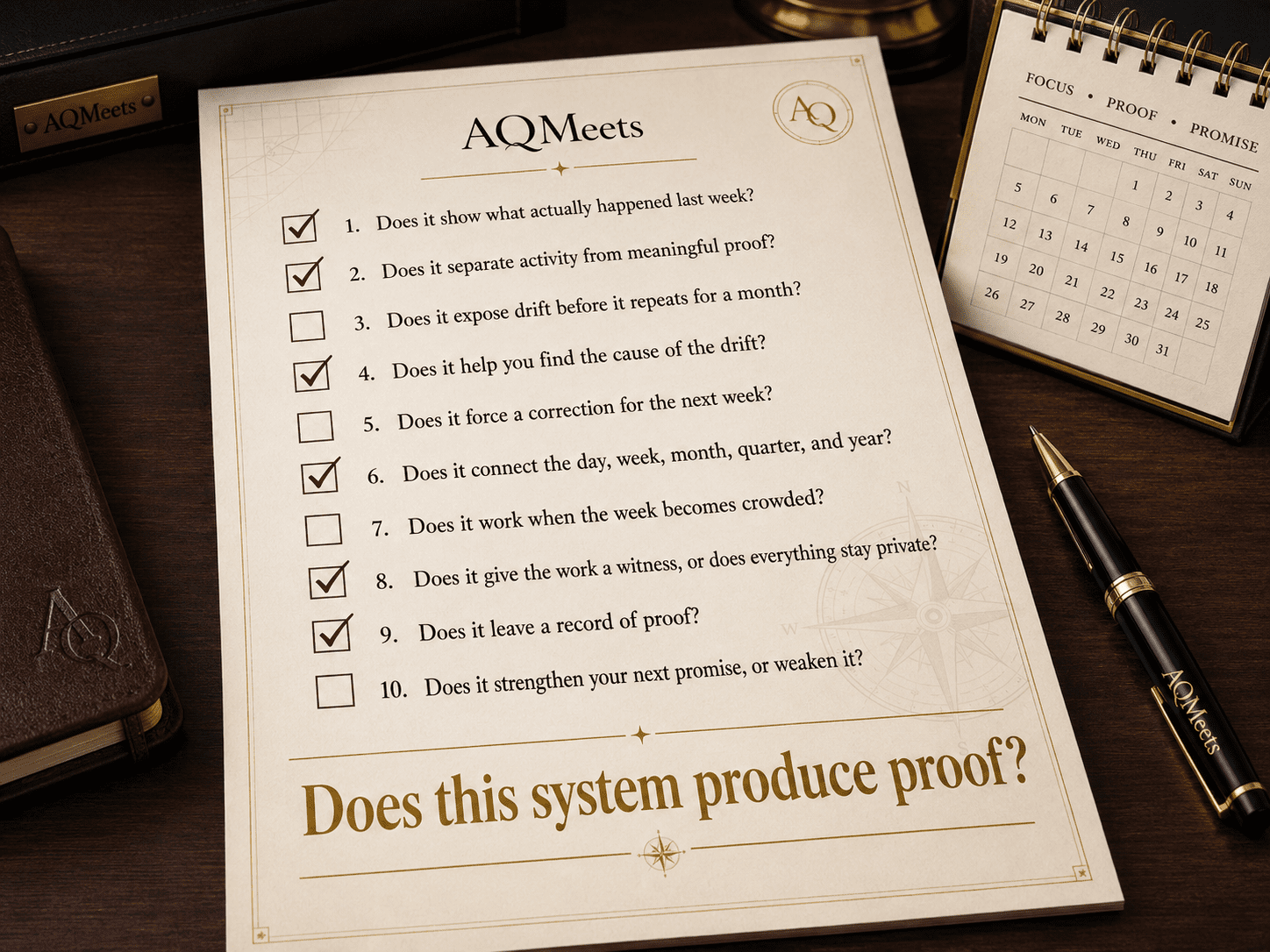
Put your current system under examination.
Your current system may still be useful. The question is whether it is strong enough to govern execution.
- Does it show what actually happened last week?
- Does it separate activity from meaningful proof?
- Does it expose drift before it repeats for a month?
- Does it help you find the cause of the drift?
- Does it force a correction for the next week?
- Does it connect the day, week, month, quarter, and year?
- Does it work when the week becomes crowded?
- Does it give the work a witness, or does everything stay private?
- Does it leave a record of proof?
- Does it strengthen your next promise, or weaken it?
If those questions are uncomfortable, pay attention.
The answer may not be a new app.
It may be a stronger rhythm.
If your system cannot correct the week, the week will keep correcting your system.
The week is already testing you.
Every interruption tests the plan. Every urgent request tests the priority. Every tired evening tests the promise. Every unreviewed Friday weakens the next Monday.
If your current system only stores intention, it is too weak for the pressure.
AQMeets gives you a live rhythm for the work most systems avoid.
You review the week with other entrepreneurs. You name proof. You expose drift. You find the likely cause. You choose correction.
At set points, you step above the week into Monthly Masteries, Quarterly Quests, and Annual Aims so the week stays connected to the larger aim.
This is the stricter test:
Did your system help you turn intention into proof?
If the honest answer is no, start with the Scorecard, compare AQMeets against the usual substitutes, or enter the AQMeets rhythm.