
Feedback Analysis
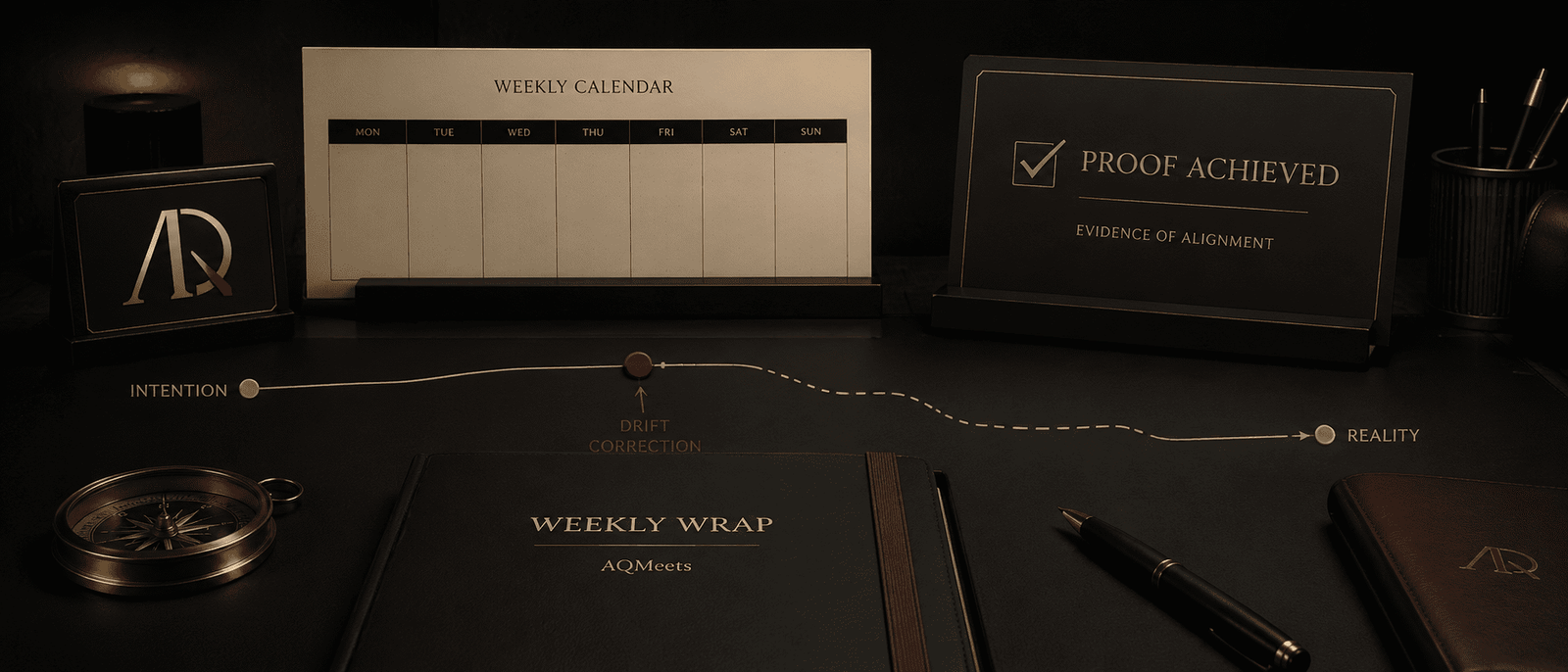
The week is already giving you feedback.
Have you reviewed it?
AQMeets uses Feedback Analysis to help self-directed builders compare intention with reality, find the drift, and choose one correction before the same pattern repeats.
Most people do not need a better plan first. They need to learn from the last one.
You began the week with intention. Then the week happened. The client message got answered first, the meeting ran long, the sales call was delayed, the proposal stayed almost finished, the health habit remained vague, and the important work moved forward again.
By Friday, you had reasons. Reasons explain the week. Feedback teaches from it.
Feedback asks:
What did I intend? What actually happened? Where did the drift begin? What caused it? What should change next week?
That is Feedback Analysis. It means letting the week teach you before you plan the next one. AQMeets builds this practice into the Weekly Wrap because a person cannot correct a week he has not reviewed.
The Repeated Reset
A new plan can hide an old pattern.
Many capable people start again every Monday. They make a cleaner list, block the time again, promise to focus, and tell themselves this week will be different.
Then the same forces return.
- Urgency.
- Avoidance.
- Fatigue.
- Messages.
- Client pressure.
- Unclear priorities.
- The uncomfortable task.
The week does not collapse, so the pattern escapes judgment. Some work gets done, some progress is made, and some fires are handled.
But the main lever still does not move.
The week was not useless.
It was unreviewed.
And an unreviewed week is easy to repeat.

The False Loop
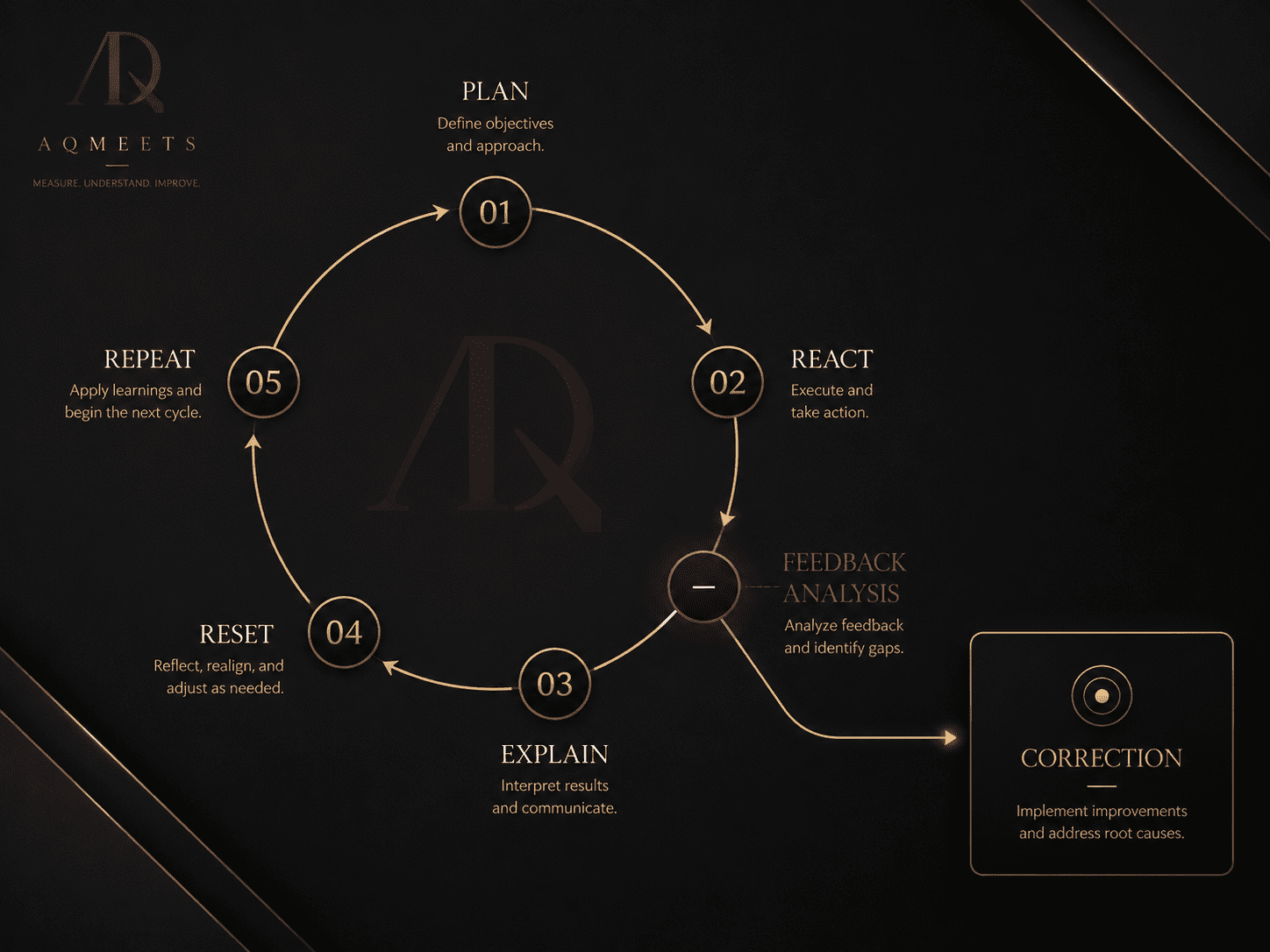
Plan. React. Explain. Reset. Repeat.
This is the loop Feedback Analysis is meant to interrupt. You plan the week, the week pushes back, you react, the meaningful work slips, and you explain what happened. Then you reset without extracting the lesson.
The next plan looks responsible, but the old pattern remains underneath it. Planning forward is not enough when the previous week has not been reviewed. The last plan revealed something.
- Maybe the task was too vague.
- Maybe the first hour was never protected.
- Maybe the sales call carried more fear than you admitted.
- Maybe the proposal had no real send point.
- Maybe the habit depended on energy you never have at that time of day.
Feedback Analysis asks the week to show its evidence before you make another promise.
The Practice
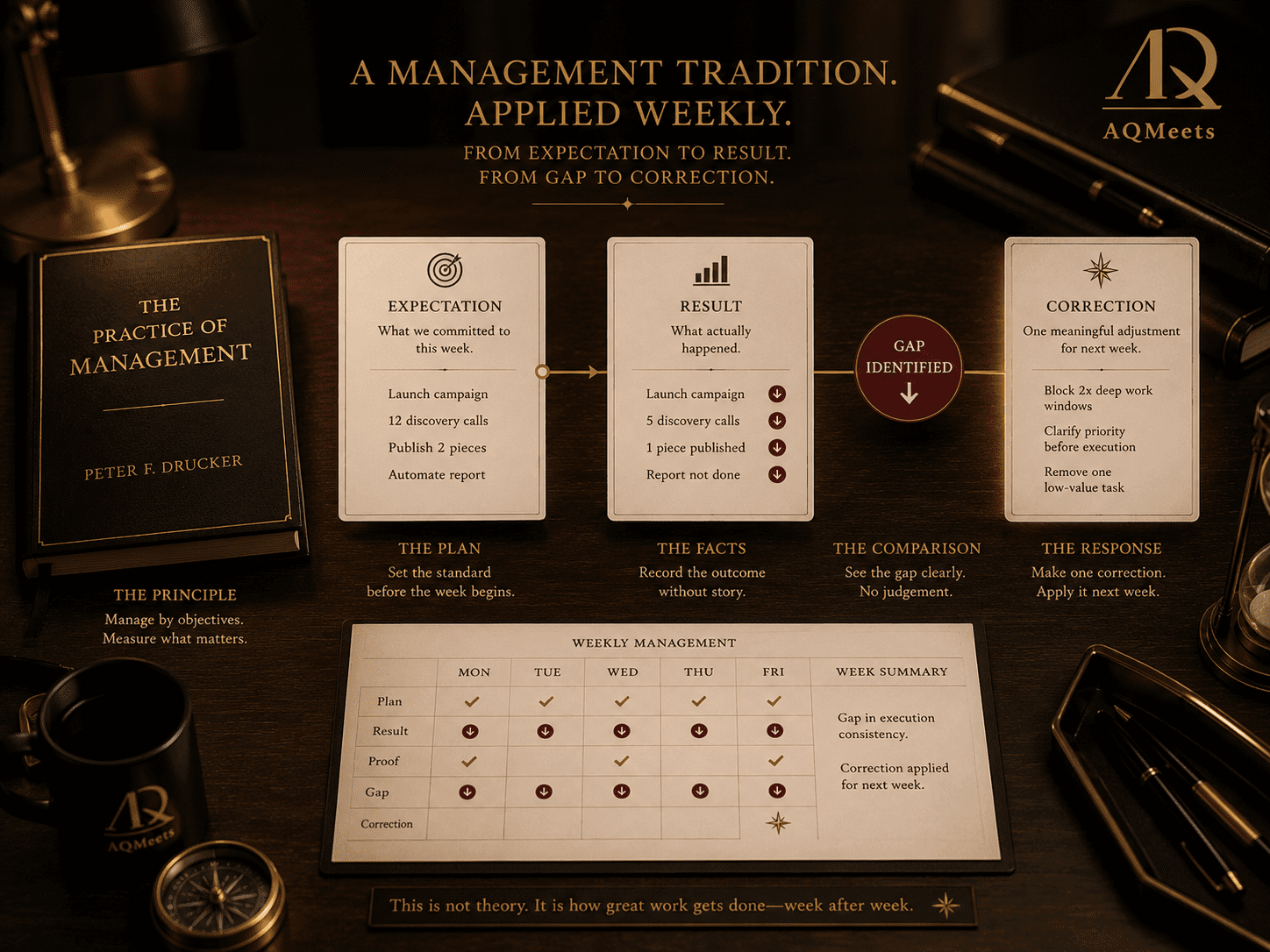
Feedback Analysis compares what you intended with what actually happened.
Feedback Analysis is simple. That does not make it comfortable. You write down what you intended, return later and compare it with reality, then ask what the difference reveals.
The point is accuracy. The week often tells the truth more clearly than memory does. Memory softens the edges, pressure supplies reasons, and emotion can exaggerate or excuse.
Evidence gives you something firmer to work with. Feedback Analysis helps you see the week as it was, not merely as you explain it afterward.
Intention
What did you intend to do?
What mattered most?
What proof were you aiming to produce?
Reality
What actually happened?
What moved?
What stalled?
What interrupted or displaced the meaningful work?
Correction
What does the difference reveal?
What must be protected, changed, simplified, delegated, confronted, or carried next week?

Why It Matters
The week already contains the lesson.
Most people try to improve by adding something new: a new tool, a new method, a new plan, or a new burst of motivation.
Often, the needed lesson is already inside the week that just happened. The value of Feedback Analysis is not that you understand the past. The value is that next week becomes harder to repeat unconsciously.
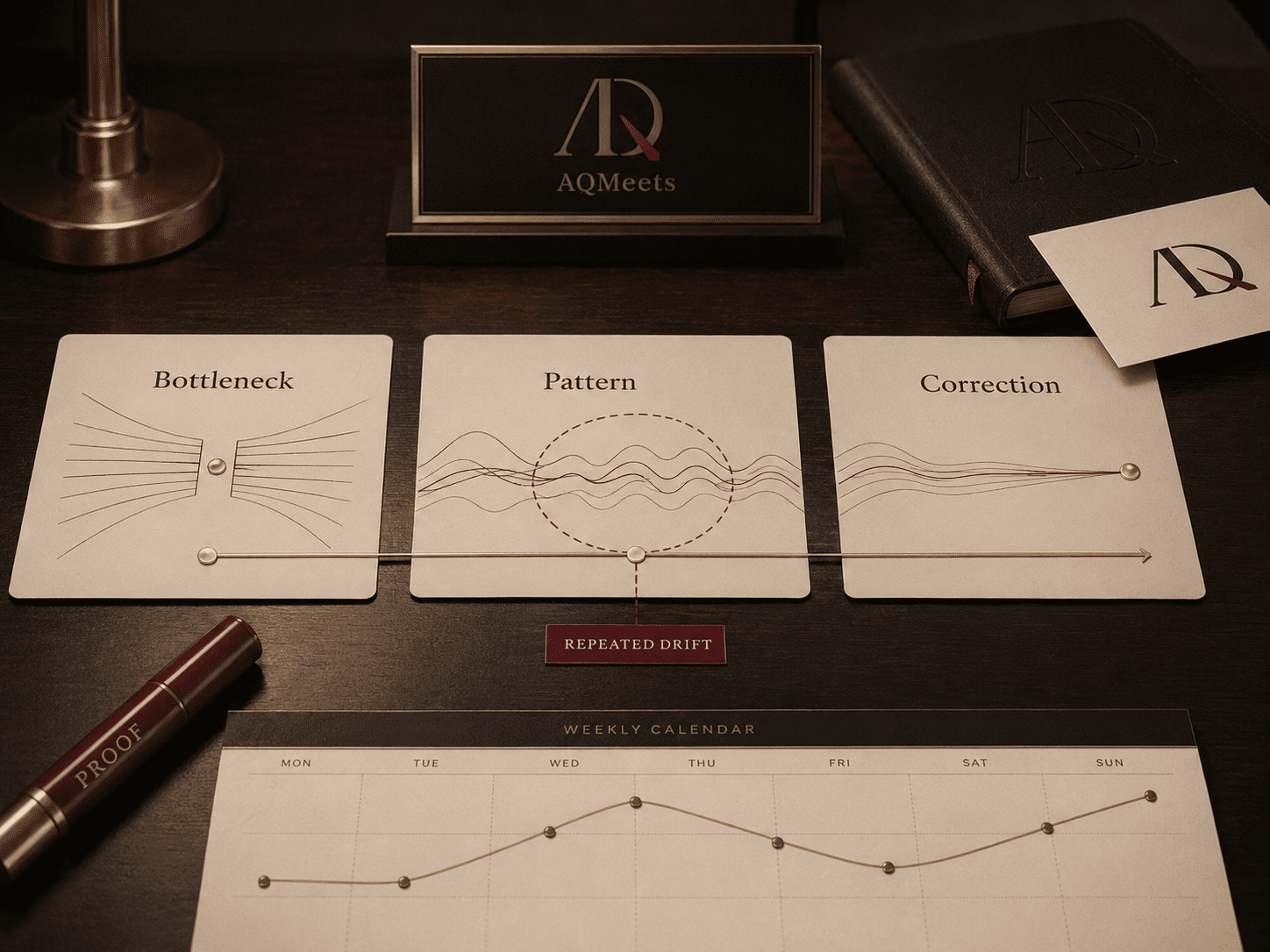
It Reveals the Real Bottleneck
You may think the problem is time.
The week may show something else.
Avoidance. An unclear priority. A weak boundary. Unprotected energy. A task that never had a clean first step.
Feedback Analysis turns a vague complaint into a visible bottleneck.
It Checks the Story Against Evidence
A person can explain almost anything after the fact.
Feedback Analysis brings the explanation back to what happened.
What was intended? What actually moved? What pattern is repeating?
It Makes Correction Small Enough to Carry
A dramatic reset usually collapses.
A precise correction has a better chance.
Feedback Analysis helps you choose one change that can alter the next week.
The AQMeets Method
AQMeets turns Feedback Analysis into a weekly rhythm.
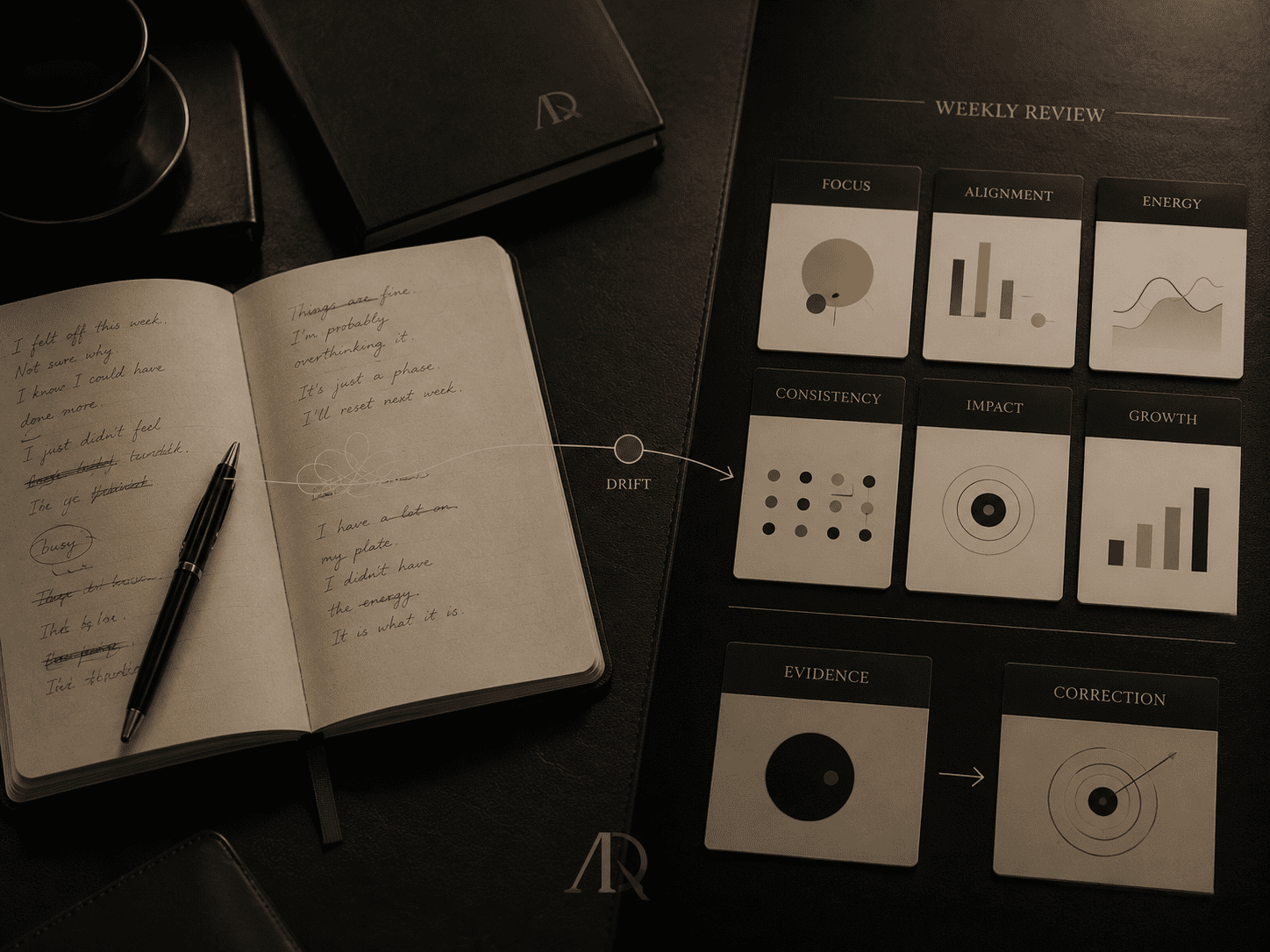
In AQMeets, Feedback Analysis is built into the Weekly Wrap. Each week, the builder returns to the evidence.
- What did I intend?
- What happened?
- Where did reality depart from intention?
- Why did it happen there?
- What correction should be carried forward?
The week stops being a blur. It becomes material for judgment. The purpose is not to analyse everything forever. The review is not finished when you understand the week; it is finished when you choose the correction.
Intention.
Reality.
Analysis.
One Correction.
Proof.
That is why the Weekly Wrap matters. It turns reflection into a lever and the next week into a test of one correction.

The Need for Rhythm
Private reflection can leave the same explanation untouched.
A person can review the week privately and still avoid the correction. He can soften the evidence, rename the problem, explain the drift, and promise another reset.
Feedback Analysis needs more than a good intention on a quiet night. It needs a rhythm, a structure, and a standard that brings the week back to evidence. AQMeets gives the review a place to happen every week.
The review does not need to become heavier.
The correction needs to become harder to avoid.
What It Is Not
Feedback Analysis is not self-criticism dressed as discipline.
Some people avoid review because they expect it to become another way to accuse themselves. AQMeets uses Feedback Analysis differently.
The goal is to tell the truth accurately enough to improve the next week.
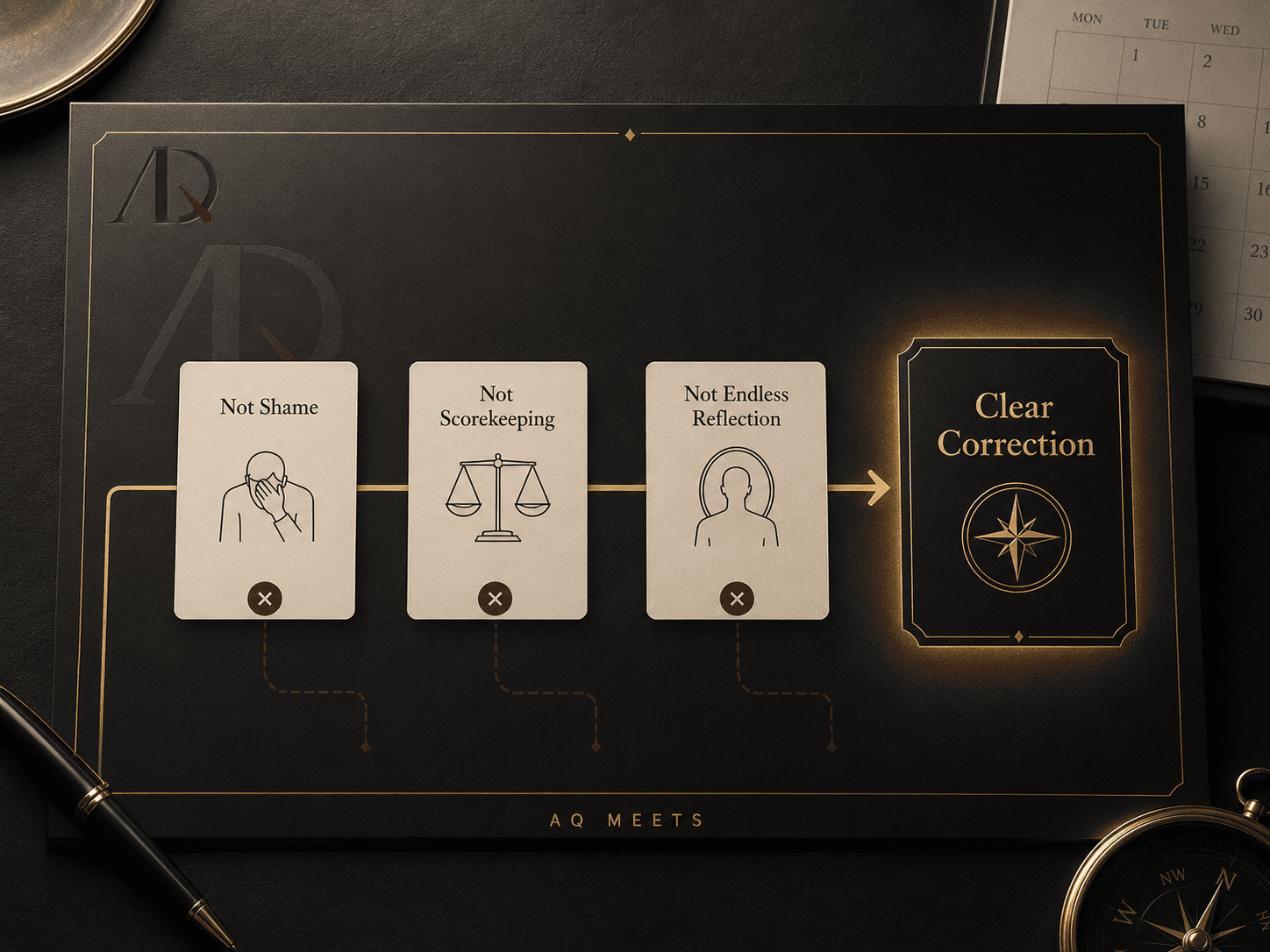
Not Shame
Shame makes people hide.
Feedback Analysis makes reality visible so correction can begin.
Not Scorekeeping
The point is not to collect marks against yourself.
The point is to see what worked, what failed, and what must change.
Not Endless Reflection
Review should not become another delay.
A good review ends with a correction.
The Root
Feedback Analysis has a serious management lineage.
Peter Drucker described Feedback Analysis as one of the clearest ways to discover strengths and performance patterns. The method is practical: write down what you expect, return later, and compare the result.
Over time, the comparison reveals where judgment is strong, where performance is weak, and where repeated assumptions keep failing. AQMeets applies that discipline to the week, where intention meets pressure and shows what a person is actually practising.
Feedback Analysis helps him see it.
What Begins to Change
A legible week can be corrected.
An unreviewed week can only be repeated.
Feedback Analysis does not make the week easy. It makes the week more legible. A person cannot correct a blur.
Less Guessing
You begin to see your actual patterns.
Not the version you intended. Not the version you explained.
The version the week proved.
Stronger Planning
Planning improves when it is informed by reality.
The next week is not built from optimism alone.
It is built from what the previous week revealed.
Faster Course Correction
Small problems are easier to correct before they become identity.
A weekly rhythm catches drift while it is still close enough to change.
More Honest Progress
You stop measuring progress only by effort.
You begin looking for proof.
What moved? What changed? What correction held?

Who This Is For
For builders who are tired of resetting without learning why the last reset failed.
This is for founders who keep pushing the same strategic work into next week; consultants who can diagnose a client’s drift but delay reviewing their own; coaches and advisers who help others reflect but need a stronger review rhythm themselves; operators whose weeks are full of solved problems but thin on meaningful proof; and small business owners who need to learn from the week before the next one begins.
It is for self-directed builders who can admit:
I do not need another reset.
I need to understand why the last reset did not hold.
Feedback Analysis gives that work a place to begin.
Founder
Operator
Consultant
Adviser
Coach
Independent Professional
Small Business Owner
Self-Directed Builder

How to Begin
Start by reviewing what the week already showed you.
You do not need to analyse your whole life today. Start with the week.
Take the Execution Scorecard if you are still trying to see the pattern. Join AQMeets Lite Free if you are ready to begin the Weekly Wrap rhythm.
Take the Execution Scorecard
See the pattern your weeks have been giving you.
Find whether you are in Drift, Busy, Rhythm, or Compounding.
Use the result as a mirror.
Take the ScorecardJoin AQMeets Lite Free
Begin the weekly practice of comparing intention with reality.
Name the drift.
Correct one thing.
Join AQMeets Lite Free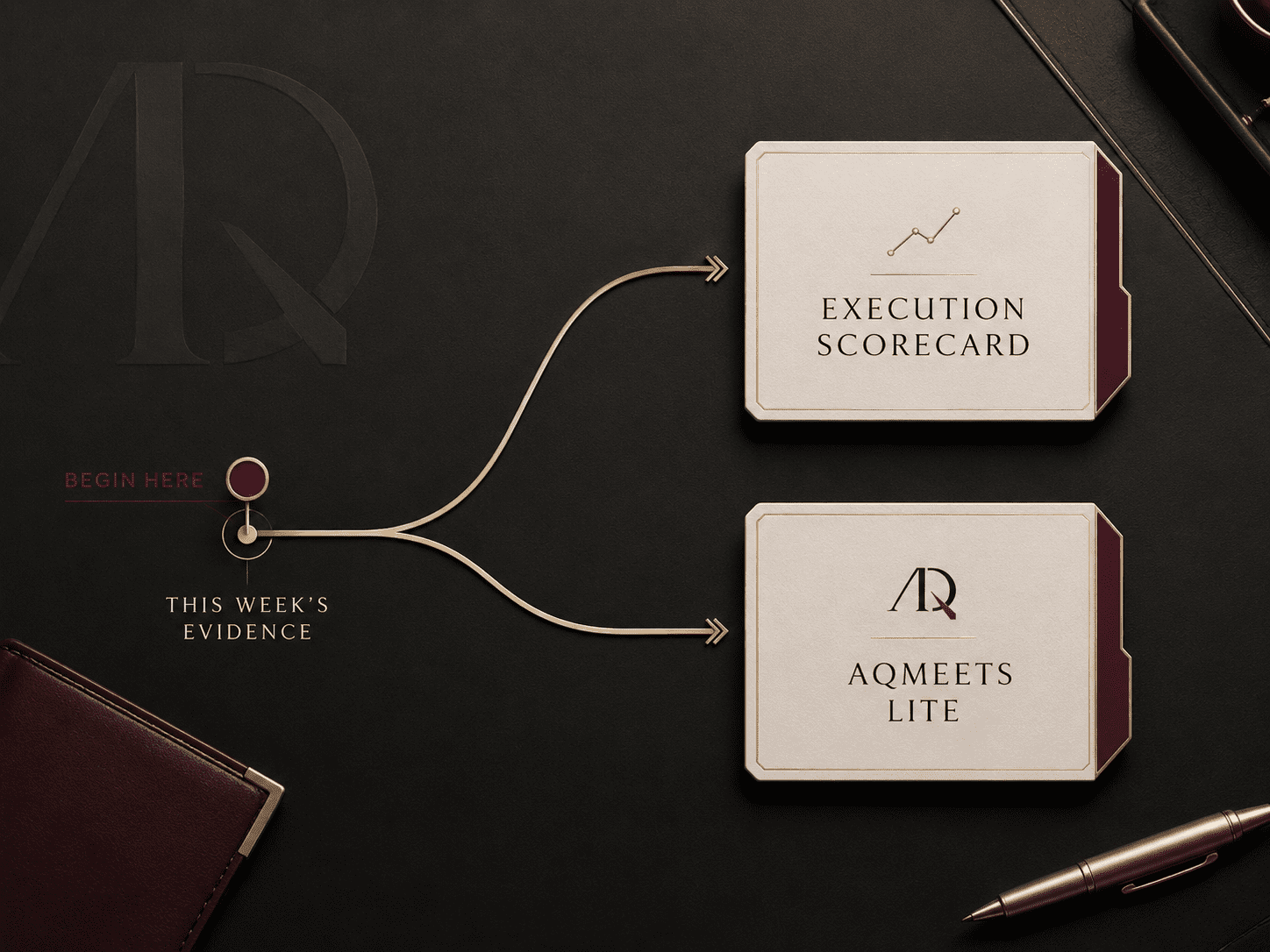
The Week Is Already Speaking
Do not let another week pass without learning from it.
The week has already given you feedback. It showed what moved, what stalled, and where intention lost authority. Review it before the same pattern repeats.
Bring the week to the table.
Compare intention with reality.
Name the drift.
Choose one correction.
Return to meaningful execution.